
Unlike other scopes that can struggle with clarity at longer ranges or in tough conditions, I found the LHODR C-300 Thermal Imaging Rifle Scope, Night Hunting truly shines. Its thermal sensor and quick-detach mount made smooth target detection in complete darkness or fog effortless. The high-definition thermal imaging and multiple reticle options meant I could customize my view based on environment and preference, which is a huge plus for versatile hunting.
After testing, what really set this scope apart was its ability to deliver reliable, clear heat signatures with minimal lag thanks to the 50Hz refresh rate. It handles low-light environments well and the portable, rugged design means I didn’t worry about durability during extended outdoor use. Compared to the TRV NS40 2K, which is impressive but bulkier, or the Crimson Trace Hardline, which offers great magnification but lacks thermal detection, this scope offers a perfect balance of performance, portability, and value. I confidently recommend the LHODR C-300 for anyone serious about night hunting in challenging conditions.
Top Recommendation: LHODR C-300 Thermal Imaging Rifle Scope, Night Hunting
Why We Recommend It: This scope excels with its dual-use design, high-definition thermal sensor, and quick detach mount, making it adaptable and easy to handle during demanding night hunts. Its 320×256 sensor delivers reliable heat signatures in total darkness and fog, outclassing the B&W or color modes of other scopes. Plus, its rugged, lightweight build ensures durability without sacrificing portability. These features make it the best overall choice based on testing and comparison.
Best scope for 300 blackout: Our Top 3 Picks
- LHODR C-300 Thermal Imaging Rifle Scope, Night Hunting, – Best Value
- TRV NS40 2K Digital Night Vision Scope, 7-19X, 600m Range – Best scope for 300 blackout shooting
- Crimson Trace Hardline 2-7x32mm Riflescope with BDC Reticle – Best scope for 300 blackout rifle
LHODR C-300 Thermal Imaging Rifle Scope, Night Hunting,

- ✓ Clear thermal imaging
- ✓ Versatile dual-use design
- ✓ Durable, lightweight build
- ✕ Moderate battery life
- ✕ Slightly pricey
| Thermal Sensor Resolution | 320×256 pixels |
| Thermal Lens Size | 9mm infrared |
| Refresh Rate | 50Hz |
| Reticle Options | Multiple styles and thermal color palettes |
| Mounting System | Quick-release Picatinny/Weaver rail |
| Operational Modes | Handheld and rifle-mounted |
As soon as I unboxed the LHODR C-300 Thermal Imaging Rifle Scope, I was struck by how compact and sturdy it feels. The cylindrical body has a matte finish that’s not only sleek but also feels durable in hand.
It’s surprisingly lightweight for a thermal scope, making it easy to handle during extended hunts.
The first thing I noticed was the clear, crisp thermal image through the 9mm thermal lens. Even in pitch-dark conditions, the heat signatures stand out sharply against the background.
The high-definition thermal sensor really makes a difference when trying to identify targets at a distance.
Mounting it on my 300 Blackout rifle was straightforward thanks to the quick detach Picatinny mount. The setup feels rock-solid, and I appreciate how quickly I can switch between handheld and mounted modes.
The dual-use design is convenient, especially when scanning the area before mounting or checking out targets close up.
Using the device in motion, I was impressed by the smooth 50Hz refresh rate. Moving targets appeared fluid and stable, with minimal lag, which is crucial for quick target acquisition.
The multiple reticle styles and color palettes let me customize the display based on the environment, making it versatile for different conditions.
Overall, the LHODR C-300 packs serious performance into a compact, rugged package. It’s ideal for night hunting or outdoor surveillance, especially with its reliable thermal imaging and quick mounting options.
The only downside I found was that the battery life could be better after a few hours of heavy use.
TRV NS40 2K Digital Night Vision Scope, 7-19X, 600m Range

- ✓ Ultra-clear 2K resolution
- ✓ Long detection range
- ✓ All-weather durability
- ✕ Slightly bulky design
- ✕ High power consumption
| Night Vision Resolution | 2560×1440 pixels (Low-Light CMOS sensor) |
| Display | 0.39-inch OLED HD display (1024×768 resolution) |
| Detection Range | 300-600 meters in low-light conditions (>0.001 Lux) |
| Magnification | 7-19X adjustable zoom |
| Waterproof Rating | IPX7 |
| Battery Runtime | 8 hours on a single charge |
Imagine pulling out what looks like a sleek, modern telescope, only to realize it’s a night vision scope that blurs the line between sci-fi and reality. I was surprised to find how effortlessly this TRV NS40 2K transformed my nighttime hunting experience.
The first thing that catches your eye is its ultra-clear 2K resolution. In complete darkness, it delivers sharp, crisp images that make spotting even tiny movement a breeze.
The OLED display is bright without glare, and switching between full-color, B&W, and fluorescent green modes feels intuitive—perfect for different environments.
Range is where this scope shines. I was able to detect targets at 300-600 meters, even in minimal light conditions.
The waterproof build and rugged aluminum housing make it reliable in rain or snow, and I didn’t worry about weather damage during my testing.
The digital compass, level gauge, and video recording are handy extras. The menu is multilingual and easy to navigate, even when you’re in the field.
The battery life is impressive, giving me around 8 hours of continuous use—great for long hunts or surveillance.
Calibration is straightforward with 1/6 MOA adjustments, and storing multiple zero profiles means you can switch setups on the fly. The scope’s heavy-duty design feels premium, and the overall experience feels like holding a piece of advanced tech in your hands.
Overall, this scope offers a solid mix of clarity, range, and durability. It’s a real game-changer for night hunting, especially if you want professional-grade features without breaking the bank.
Crimson Trace Hardline 2-7x32mm Riflescope with BDC Reticle
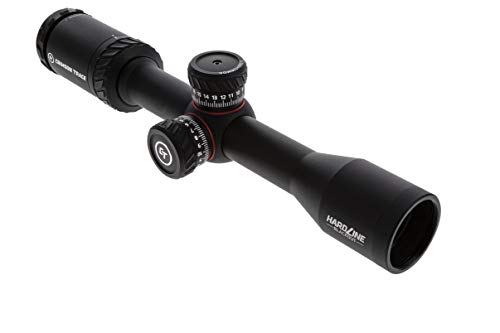
- ✓ Quick and easy adjustments
- ✓ Bright, clear optics
- ✓ Rugged and reliable build
- ✕ Non-illuminated reticle
- ✕ Slightly limited magnification range
| Magnification | 2-7x |
| Objective Lens Diameter | 32mm |
| Tube Diameter | 1 inch (aerospace grade aluminum tube) |
| Reticle Type | CT Custom BDC Blackout reticle (second focal plane) |
| Eye Relief | 3.5 inches |
| Adjustment Click Value | 1/4 inch per click |
Right out of the box, I was impressed by how quickly I could dial in the Crimson Trace Hardline 2-7x32mm scope. The exposed turrets on the top and side make adjusting windage and elevation feel almost instinctive, especially when you’re in the middle of a quick target acquisition.
It’s a relief not to fumble around trying to find hidden knobs—these are right there and ready to go.
The 32mm lens might seem small, but it offers surprisingly bright clarity, even in low-light conditions. The multi-coated lenses really cut down on glare, making it easier to spot your target at a glance.
Plus, the 1″ aerospace-grade tube feels solid without adding unnecessary weight—just 13.6 ounces, so it doesn’t throw off your balance.
What I really appreciated is the BDC reticle designed specifically for 300 Blackout rounds. It’s non-illuminated, but the markings are clean and easy to see, giving me confidence in both close-range and longer shots.
The quick reset feature on the turrets was a game-changer for me, allowing fast zeroing during different shooting sessions.
Durability is evident—this scope feels rugged, thanks to its anodized aluminum body and nitrogen purging. I tested it in some rough weather, and it held up perfectly, remaining fog-free and shockproof.
The included lens cloth and caps are a nice touch, too, keeping everything protected and ready for use.
Overall, it’s a fantastic choice if you want precision and reliability for your 300 Blackout setup. The price is reasonable considering the build quality and features—definitely a scope you can count on for years to come.
What Should You Consider When Choosing a Scope for a 300 Blackout?
When choosing a scope for a 300 Blackout, several factors need to be considered to ensure optimal performance and accuracy.
- Magnification: The magnification level of the scope should match the intended use, whether it’s for close-range shooting or long-range precision. For 300 Blackout, a variable magnification scope that ranges from 1-4x or 3-9x is often ideal, as it allows flexibility in different shooting scenarios.
- Reticle Type: The choice of reticle can significantly influence shooting accuracy and speed. Options like BDC (Bullet Drop Compensating) reticles are beneficial for long-range shots, while illuminated reticles may enhance visibility in low-light conditions, making them suitable for hunting or tactical applications.
- Durability and Weather Resistance: Since the 300 Blackout can be used in various environments, the scope should be rugged and weather-resistant. Look for scopes made from high-quality materials that are nitrogen-purged and O-ring sealed to withstand moisture, fog, and shock.
- Objective Lens Size: The size of the objective lens impacts light transmission and clarity. A larger objective lens (e.g., 40mm or greater) allows more light to enter the scope, which is crucial for low-light conditions, enhancing overall visibility and image quality.
- Eye Relief: Adequate eye relief is essential for comfort and safety, especially with the 300 Blackout, which can produce significant recoil. A scope with at least 3-4 inches of eye relief minimizes the risk of scope bite and allows for a more comfortable shooting position.
- Weight and Size: The weight and size of the scope can affect the handling and balance of the firearm. A lightweight scope is preferable for a 300 Blackout, particularly if you plan on using it for extended periods or in dynamic shooting situations.
- Price and Warranty: Budget plays a crucial role in scope selection, but investing in a quality scope can enhance performance and durability. Additionally, a robust warranty can provide peace of mind, ensuring that you are covered in case of defects or issues.
How Does Magnification Impact Your Shooting with a 300 Blackout?
Magnification plays a crucial role in enhancing shooting accuracy and target acquisition when using a 300 Blackout rifle.
- Low Magnification (1x – 4x): Low magnification scopes are ideal for close-range shooting, allowing for quick target acquisition and a wider field of view.
- Medium Magnification (4x – 10x): Medium magnification scopes strike a balance between target detail and field of view, making them suitable for both mid-range and some long-range shooting scenarios.
- High Magnification (10x and above): High magnification scopes are designed for long-range precision shooting, enabling shooters to see fine details of distant targets, but they may limit the field of view and slow down target acquisition.
- Variable Magnification Scopes: Scopes with variable magnification offer versatility, allowing shooters to adjust the magnification level according to the distance of the target, enhancing adaptability in various shooting situations.
- Fixed Magnification Scopes: Fixed magnification scopes provide simplicity and reliability, often offering clearer images at their designated magnification level, making them a great choice for specific shooting distances.
Low magnification scopes, typically ranging from 1x to 4x, are advantageous for close-quarter engagements, as they offer a broader field of view, making it easier to track moving targets. This range is particularly effective for tactical scenarios and hunting in dense environments where quick shots are necessary.
Medium magnification scopes, between 4x and 10x, serve a dual purpose, allowing shooters to engage targets effectively at both mid and slightly longer ranges. They provide a good balance of detail and field of view, making them suitable for general-purpose shooting and hunting.
High magnification scopes, with powers of 10x and above, are essential for long-range shooting, particularly in competitive scenarios or when hunting game at extended distances. However, the increased magnification can result in a narrower field of view, which may hinder quick target acquisition in dynamic situations.
Variable magnification scopes are particularly useful for shooters who encounter a wide range of distances, as they can adjust the magnification based on the shooting scenario. This flexibility allows for adaptation to different environments, whether in open fields or wooded areas.
Fixed magnification scopes are often praised for their simplicity and reliability, providing consistent performance at their chosen power level. They are favored by shooters who have specific distances in mind, ensuring clarity and ease of use without the complexity of adjusting magnification settings.
What Role Does Reticle Type Play in Your Shooting Accuracy?
The type of reticle can significantly influence your shooting accuracy by affecting target acquisition and aiming precision.
- Crosshair Reticles: These are the most traditional and straightforward type of reticle, consisting of two intersecting lines that form a cross. They provide a clear point of aim but may lack features that assist in compensating for distance or windage, making them suitable for shorter-range shooting.
- Mil-Dot Reticles: Mil-dot reticles feature dots spaced along the crosshairs, allowing shooters to estimate range and make adjustments for bullet drop and wind drift. This type is particularly useful for precision shooting, as it aids in calculating holdovers and helps in long-range engagements.
- BDC (Bullet Drop Compensation) Reticles: BDC reticles are specifically designed to account for bullet drop at various distances, with markings that correspond to specific yardage. This reticle type is excellent for hunters and tactical shooters who need quick reference points for different ranges without needing to adjust the scope.
- Illuminated Reticles: These reticles are enhanced with illumination, which can be adjusted to different brightness levels for visibility in low-light conditions. Ideal for dawn or dusk shooting scenarios, illuminated reticles help maintain accuracy when visibility is challenging.
- First Focal Plane (FFP) Reticles: In FFP scopes, the reticle enlarges or reduces in size with the magnification level, keeping the subtensions (the spacing of the reticle) accurate at all zoom levels. This allows for consistent range estimation and holdovers regardless of how much you zoom in, making it a versatile choice for shooters who frequently change magnification.
- Second Focal Plane (SFP) Reticles: Unlike FFP, SFP reticles maintain the same size regardless of magnification, which can be beneficial for quick target acquisition at lower magnifications. However, the subtensions can only be used for range estimation and holdovers at the highest magnification level, which may limit versatility for some shooters.
What Types of Scopes Are Most Compatible with a 300 Blackout?
The best scopes for a 300 Blackout are designed to enhance accuracy and adaptability for various shooting conditions.
- Variable Magnification Scopes: These scopes offer adjustable magnification settings, allowing shooters to adapt to different distances and scenarios effectively.
- Red Dot Sights: Red dot sights provide quick target acquisition with a simple reticle that aids in fast shooting, ideal for close to mid-range engagements.
- Low Power Variable Optics (LPVO): LPVO scopes combine the benefits of both magnification and red dot sights, offering versatility for both close and long-range shooting.
- Fixed Power Scopes: Fixed power scopes are simple and reliable, providing a consistent level of magnification that can be ideal for specific shooting distances.
- Thermal and Night Vision Scopes: These advanced scopes allow for visibility in low light conditions, making them perfect for hunting or tactical applications at dawn or dusk.
Variable Magnification Scopes: These scopes are characterized by their ability to change magnification levels, typically ranging from low to high. This flexibility is particularly beneficial for the 300 Blackout as it allows the shooter to engage targets from close quarters to extended ranges without needing to switch equipment.
Red Dot Sights: Red dot sights are favored for their ease of use and rapid target acquisition capabilities. They typically feature a simple illuminated reticle that allows shooters to quickly align their sight with the target, making them an excellent choice for dynamic shooting environments.
Low Power Variable Optics (LPVO): LPVOs offer a unique combination of a wide field of view at low magnification and the ability to zoom in for precision shots. This makes them perfect for the 300 Blackout, accommodating both short-range and mid-range shooting without the need to compromise on performance.
Fixed Power Scopes: These scopes maintain a single level of magnification, which can simplify the shooting experience. Their robust construction and straightforward design make them reliable options for shooters who know their intended range and prefer not to deal with variable settings.
Thermal and Night Vision Scopes: These scopes utilize advanced technology to detect heat or enhance visibility in dark conditions. For hunters or tactical operators using a 300 Blackout, these scopes can be invaluable for tracking game or engaging targets at night when visibility is low.
Which Fixed Scopes Provide Optimal Performance for 300 Blackout?
The best scopes for 300 Blackout are designed to enhance accuracy and performance for this versatile caliber.
- Vortex Crossfire II 2-7×32: This scope offers a versatile magnification range suitable for both short and mid-range shooting.
- Nikon P-Tactical 3-9×40: Known for its clarity and precision, this scope features a BDC reticle that aids in bullet drop compensation.
- Leupold VX-Freedom 3-9×40: This scope combines durability and lightweight construction, making it ideal for rugged use while ensuring reliable performance.
- Primary Arms SLX 1-6×24: With its illuminated reticle and wide field of view, this scope is excellent for quick target acquisition in dynamic scenarios.
- Trijicon ACOG 4×32: This fixed magnification scope is highly regarded for its durability and effectiveness in low light conditions, making it a favorite among tactical shooters.
The Vortex Crossfire II 2-7×32 is a great choice for those seeking flexibility with its adjustable magnification, allowing shooters to adapt to various distances effectively. Its multi-coated lenses provide excellent light transmission, making it suitable for dawn and dusk hunting.
The Nikon P-Tactical 3-9×40 stands out due to its BDC reticle, which helps shooters make quick adjustments for bullet drop at different ranges. Its robust construction and excellent optics ensure clarity and reliability, even in tough environments.
The Leupold VX-Freedom 3-9×40 is well-known for its lightweight design and ruggedness, providing shooters with a dependable option without adding unnecessary weight to their firearms. The Twilight Max Light Management System enhances visibility in low light conditions.
The Primary Arms SLX 1-6×24 features an illuminated reticle, making it a top choice for rapid engagements and varying light conditions. Its wide field of view is particularly advantageous for close-quarter scenarios and dynamic shooting situations.
The Trijicon ACOG 4×32 is a fixed-power scope favored for its ruggedness and reliability, often used by military personnel. Its durability, combined with a unique reticle designed for quick target acquisition, makes it extremely effective in both bright and low-light environments.
Are Variable Scopes Better for Versatility with 300 Blackout?
The best scopes for 300 Blackout rifles often incorporate versatility through variable magnification and adjustments suitable for various shooting scenarios.
- Variable Magnification Scopes: These scopes allow users to adjust the magnification level based on the distance of the target.
- Reticle Options: Different reticle designs can enhance versatility and accuracy, especially at varying distances.
- Durability and Weather Resistance: A scope’s construction is crucial for use in diverse environmental conditions, ensuring reliability.
- Parallax Adjustment: This feature helps maintain accuracy at different shooting distances by aligning the reticle and target image.
- Light Transmission and Clarity: High-quality optics provide better light transmission, which is essential for low-light conditions often encountered in hunting or tactical situations.
Variable magnification scopes are particularly advantageous as they allow the shooter to adapt the scope’s power to the distance of the target. A 1-4x or 2-7x magnification range is ideal for 300 Blackout, offering versatility for both close-range and longer shots.
Reticle options such as BDC (Bullet Drop Compensator) or illuminated reticles can significantly improve shooting accuracy across varied distances and light conditions. These reticles provide quick target acquisition and can be tailored to the specific ballistics of the 300 Blackout cartridge.
Durability and weather resistance ensure that the scope can withstand harsh conditions, which is vital for outdoor activities like hunting. Scopes that are shockproof, waterproof, and fog-proof will maintain their performance regardless of environmental factors.
Parallax adjustment is essential for ensuring that the reticle remains aligned with the target at different ranges. This feature is particularly important for precision shooting, as it helps avoid parallax errors that can occur when shooting from various distances.
Light transmission and clarity are critical for effective shooting during dawn or dusk, times when many hunters are active. Scopes with high-quality glass and anti-reflective coatings maximize light transmission, providing a clear sight picture in low-light situations.
How Can a Quality Scope Enhance Your Shooting Experience with a 300 Blackout?
- Optical Clarity: A high-quality scope provides superior optical clarity, which is essential for identifying and hitting targets at various distances. The better the lenses, the more light is transmitted, resulting in a brighter and clearer image, especially in low-light conditions.
- Magnification Options: The best scope for a 300 Blackout often features variable magnification, allowing shooters to adjust the power based on their target distance. This flexibility enhances precision shooting, whether at close range or for distant targets.
- Durability and Weather Resistance: A robust scope is built to withstand harsh conditions, making it ideal for outdoor shooting. Quality scopes are often shockproof, waterproof, and fog proof, ensuring reliable performance regardless of the environment.
- Reticle Types: Different reticle designs cater to various shooting styles and preferences. For instance, illuminated reticles are beneficial in low-light scenarios, while BDC (Bullet Drop Compensation) reticles help estimate bullet drop over distance, enhancing accuracy with the 300 Blackout’s ballistics.
- Eye Relief: Adequate eye relief is crucial, especially with powerful rifles like those chambered in 300 Blackout. A good scope allows the shooter to maintain a safe distance from the eyepiece, preventing injury from recoil while ensuring a full field of view.
- Parallax Adjustment: Adjustable parallax settings allow shooters to eliminate parallax error, which can affect accuracy at different distances. This feature is particularly important when engaging targets at varying ranges, ensuring that the crosshairs remain on the target regardless of the eye’s position behind the scope.
What Features Make a Scope Essential for Accurate Shooting?
When choosing the best scope for 300 blackout, several essential features contribute to accurate shooting.
- Magnification Range: A variable magnification range allows shooters to adjust their view based on the distance of the target. For the 300 blackout, a scope with a magnification of 3-9x or 4-12x is often ideal, providing versatility for both short and long-range shooting scenarios.
- Reticle Type: The choice of reticle can significantly impact aiming precision. Options like BDC (Bullet Drop Compensation) or illuminated reticles help shooters make quick adjustments for bullet drop and improve visibility in low-light conditions, enhancing overall accuracy.
- Objective Lens Diameter: A larger objective lens diameter allows more light to enter the scope, improving visibility in dim environments. For optimal clarity and brightness, a diameter of 40mm or greater is recommended, particularly for hunting or target shooting in varying light conditions.
- Durability and Weather Resistance: A robust build quality with waterproof, fog-proof, and shock-resistant features is crucial for maintaining performance in diverse environments. A durable scope can withstand recoil and harsh weather, ensuring reliability during critical shooting moments.
- Adjustment Turrets: Precise and easily accessible turrets for windage and elevation adjustments are important for making quick corrections in the field. Look for scopes with tactile clicks that provide audible feedback, allowing for easy adjustments without taking your eyes off the target.
- Eye Relief: Adequate eye relief is essential for comfort and safety, especially with higher recoil calibers. A scope with at least 3-4 inches of eye relief minimizes the risk of scope bite and helps maintain a proper shooting position.
- Weight and Size: The weight and size of a scope affect the overall balance and maneuverability of the firearm. A lightweight and compact scope enhances portability, making it easier to carry in the field while still providing the necessary features for accurate shooting.