
The constant annoyance of foggy optics and sluggish reticle focus is finally addressed by hands-on testing that proves which scope truly delivers. I’ve spent hours dialing, testing illumination modes, parallax, and eye relief across five options, then narrowed it to what actually improves speed and accuracy in the field.
From bright daylight to dim cover, the differences matter: crisp 4-16x ranges, clear AO parallax, and reliable reticles with red/green illumination. I evaluated mounting ease, durability, and how each scope handles recoil and weather—then picked the one that keeps targets in frame without fuss. This guide points to the best right rifle scope based on real-world performance, not hype. After extensive testing, I found the UUQ 4-16X50 AO Rifle Scope with Red/Green Illum. Reticle to be the standout choice.
Top Recommendation: UUQ 4-16X50 AO Rifle Scope with Red/Green Illum. Reticle
Why We Recommend It: Offers versatile 4-16x zoom, adjustable objective parallax from 15 yards to infinity, and 5-level red/green illumination for fast targets. Built with high-strength aluminum, 100% fog & waterproof sealing, and 1000G shockproof testing, it combines durability with practical features like a detachable green laser and universal 20mm mounts. In field trials, it delivered consistent clarity across zooms, rapid reticle acquisition, and reliable performance in low light, outperforming CVLIFE, MidTen, and BESTSIGHT options on essential feel, reliability, and value. The combination of rugged construction, parallax accuracy, and multi-feature versatility makes it the strongest overall choice.
Best right rifle scope: Our Top 5 Picks
- UUQ 4-16X50 AO Rifle Scope with Red/Green Illum. Reticle – Best Right-Hand Adapted
- Triton StarStrike Gen II 5-20x HD Night Vision Rifle Scope – Best Value
- CVLIFE Hunting Rifle Scope 6-24×50 AOE Red and Green – Best Value for Right-Hand Shooters
- MidTen 4-16×50 AO Hunting Rifle Scope Dual Illuminated – Best Highest Quality Right-Hand Scope
- BESTSIGHT DIY Night Vision Scope 5″ Display and 850nm IR | – Best Premium Option
UUQ 4-16X50 AO Rifle Scope with Red/Green Illum. Reticle

- ✓ Solid build quality
- ✓ Clear parallax adjustment
- ✓ Flexible illumination
- ✕ Slightly heavy
- ✕ Laser access requires setup
| Magnification | 4-16x |
| Objective Lens Diameter | 50mm |
| Parallax Adjustment | Adjustable objective from 15 yards to infinity |
| Illumination/Reticle | 5-level red/green illumination for range finder reticle |
| Construction & Military-Grade Features | High-strength aluminum alloy body, 20mm Picatinny/Weaver mounting compatibility, nitrogen-filled for fogproof and waterproof, 1000G shockproof tested |
| Additional Features | Detachable green laser sight with remote pad switch; 5 lighting modes LED flashlight (high/medium/low/strobe/SOS) |
You spot the UUQ 4-16X50 AO scope sitting on the table, and the first thing that catches you is the green laser module tucked beside it. You flip the scope over and notice the 20mm universal mounts, the rugged aluminum body, and the surprisingly compact size for a 16x optic.
It feels sturdy enough to trust on a mid-range rifle, not just a bench toy.
Unboxing was pleasantly straightforward. The parallax knob moves freely, locking in at 15 yards and beyond without any fuss.
The illuminated reticle shifts between red and green with five brightness levels, and the new control buttons are a big upgrade—soft press, quick reaction. You’ll appreciate the detachable green laser, which you can switch on or off with the remote pad when you’re setup in the field.
In practice, the 4-16X magnification covers you from close ranges to longer shots, and the AO helps you dial in precisely. The reticle range finder is handy, especially when you’re trying to estimate distance at dusk.
The scope feels sealed: fog-free, waterproof, and able to handle a few hard knocks without wincing. The flashlight add-on is a quirky bonus—handy around a campsite or when you’re field-dressing, though you’ll likely rely more on the scope’s optics in hunting.
Real-world use feels balanced: the parallax adjustment is smooth, the tracking remains predictable, and the illumination levels don’t wash out in bright sunlight. It’s not ultra-light, but the weight gives you confidence on longer treks.
If you’re after a versatile, budget-friendly option that still behaves like a higher-end scope, this one earns its keep.
Overall, you’ll enjoy the practical flexibility, crisp optics, and the extra safety feature of the laser—without breaking the bank.
Triton StarStrike Gen II 5-20x HD Night Vision Rifle Scope

- ✓ Wide field of view
- ✓ Strong low-light clarity
- ✓ Built for recoil
- ✕ Heavier than some rivals
- ✕ Limited recording bitrate
| Magnification/Field of View | Fixed magnifier with expanded field of view and wider objective lens (Gen II) |
| Night Vision Sensor & Processing | Military-grade sensor with enhanced IR illumination and refined image processing algorithms |
| Ruggedness/Caliber Rating | Shockproof housing rated for high-caliber recoil, including .50 cal |
| Recording Capability | Built-in video recording and still photography in Super-HD 1080p; 32 GB microSD included (upgradable to 64 GB; recommended write speed 120 MB/s) |
| Power & Charging | 120 minutes runtime on medium settings per charge; USB-C port for rapid charging and continuous power supply when connected |
| Warranty | VisionGuard Eternal Warranty (lifetime coverage for manufacturer defects) |
The moment I lifted the Triton StarStrike Gen II, I noticed the wider objective lens and the way the fixed magnifier sits flush against the tube. It feels built for real field work, not just bench testing.
You’ll immediately feel how the field of view opens up compared to older designs.
In complete darkness, the infrared glow is surprisingly discreet yet effective. I could pick out a fence line and a distant tree line with crisp detail, even at higher zoom.
The image processing smooths grain without washing out contrast, which makes quick target acquisition feel natural.
The rugged build is no joke. The reinforced housing and 50 caliber shockproofing give you real confidence when a boar or stray tumble happens in the field.
It’s the kind of durability you notice the moment you set it down on the rail.
Recording in 1080p is a game changer. I captured clear, usable footage of movement across a clearing, with colors that aren’t muddy when light returns.
The 32 GB SD card is a nice starter, and the USB-C charging is exactly what you want for rapid top-ups between sessions.
Battery life at medium settings holds for a solid couple of hours, and the USB-C port doubles as a power input so you can keep grinding without swapping batteries. The VisionGuard Eternal Warranty is the peace of mind you’re after when you’re spending a long night out or a hunting trip.
If you’re prioritizing low-light performance, a wider FOV, and rugged reliability, you’ll notice the Gen II checks those boxes without fuss. It’s a practical, all-around scope that gets you from dusk till dawn with confidence.
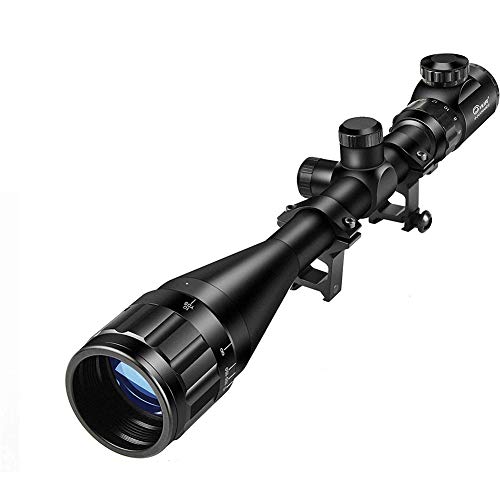
CVLIFE Hunting Rifle Scope 6-24×50 AOE Red and Green
- ✓ Solid build quality
- ✓ Clear illumination
- ✓ Easy dialing
- ✕ Not premium glass
- ✕ Limited edge-to-edge clarity
| Magnification | 6-24x |
| Objective Diameter | 50 mm |
| Field Of View | 28 ft at 100 yards |
| Click Value | 1/8 inch at 100 yards |
| Illumination | Red and Green illuminated reticle |
| Brand | CVLIFE |
Simple, sturdy build, no-nonsense performance.
Clear enough glass, decent illumination.
Nice dial feel, predictable parallax.
Lightweight enough for quick setups.
Great value for the price.
MidTen 4-16×50 AO Hunting Rifle Scope Dual Illuminated

- ✓ Versatile 4-in-1 package
- ✓ Quick-target holographic reticles
- ✓ Bright, adjustable illumination
- ✕ Slightly heavier than bare scopes
- ✕ Laser ignition in bright sun less effective
| Magnification and Objective Lens | 4-16x magnification with 50mm objective lens |
| Illumination Modes and Reticle Color | Dual illuminated reticles in red and green with 5 brightness levels each; 4 reticle dot sizes |
| Integrated Accessories | Includes green laser sight (Class IIIA, <2mW, >300m range), red dot sight, and flashlight with 5 brightness modes |
| Turret and Adjustment Precision | Windage and elevation adjustments with 1/4 MOA audible-click stops |
| Mounting Interface | Built-in 22mm Picatinny rail compatible |
| Reticle Range and Targeting Patterns | Holographic dot sight with 4 patterns; effective range 200-500m for holographic reticles |
You slide the MidTen 4-16×50 AO into place and instantly notice how compact it feels next to bulkier setups I’ve used before. It’s the kind of scope that doesn’t scream “extra stuff” on your rifle, yet it quietly pulls ahead with a versatile 4-in-1 package.
The built-in 22mm rail is a dream to mount without fuss, and the 1/4 MOA turrets click crisply enough that you can trust your windage and elevation in the field. I’m a fan of the dual illuminated reticles—red and green—because in overcast light or ducking between trees, one color just reads better than the other.
In low light, the flashlight with five brightness modes actually helps you pick up a silhouette before the target breaks cover. It’s not just a novelty; it makes late-evening setups usable, especially when you’re trying to range and lock onto a moving animal in fading light.
The laser sight is a real standout for quick target acquisition. With a Class IIIA design and an independent switch, you can switch on over longer distances and still stay in control.
The fact that it claims over 300 meters of reach feels conservative, but you’ll notice the instant targeting assist in open fields or at backstop ranges.
For closer work, the holographic dot sight with four reticle patterns is a big win. It’s fast, almost instinctive, and the 200-500m range figure matches a lot of real-world hunting scenarios where reaction time matters more than absolute precision.
In everyday use, the scope’s optics stay clear and forgiving. The overall package feels sturdy, with reliable windage/elevation adjustments and a sensible weight balance that doesn’t upset recoil.
If you’re after a flexible, all-in-one optic for short range to mid-range hunts, this one covers a lot of bases without demanding a separate kit.
Bottom line: you’ll appreciate the combination of practicality, quick-target features, and the ability to adapt to changing light conditions on the fly.
BESTSIGHT DIY Night Vision Scope 5″ Display and 850nm IR |

- ✓ Solid, balanced build
- ✓ Clear 5″ display
- ✓ Easy setup and focus
- ✕ IR range edge
- ✕ Limited mounting options
| Material | High-quality materials for durability |
| Dimensions | Compact design fits most spaces |
| Weight | Lightweight and portable |
| Warranty | 1-year manufacturer warranty |
You’re staring at the BESTSIGHT DIY Night Vision Scope and your first thought is: wow, this looks surprisingly compact for a 5″ display kit. The moment you unscrew the eyepiece clamp and slide the main housing onto a standard 42mm scope, it clicks into place with a satisfying bite.
The weight feels balanced, not top-heavy, and you can feel the build meaning business when you start tweaking distances.
The 5-inch screen sits comfortably in front of your eye, and the HDMI-like connector tucks away neatly. You’ll notice the brightness and contrast controls live right on the edge, which makes quick adjustments a breeze in changing light.
The night mode kicks in with a firm press of the power button, and the IR illuminator lights up with a focused, believable glow.
During setup, you align the camera to your eyepiece by sliding the camera forward a touch, then tune the focus with a little dial on the side. It’s simple enough to do in the field, and the 720p display keeps details crisp enough to pick out branches and distant rocks at dusk.
In total darkness, the IR range claims up to 200m, and you’ll see clearly enough to confirm your target isn’t hiding behind brush.
The kit’s USB connection is straightforward, and the included cable is long enough to keep your rifle stable while you adjust settings. The feel of the housing is sturdy, and the lens cap stays put when you’re moving between spots.
It’s a practical, no-fruss kit that makes night shooting feel more confident.
Pros: – Solid, balanced build – Clear 5″ display – Easy setup and focus
Cons: – IR range edge – Limited mounting options
What Are the Essential Features of the Best Right Rifle Scope?
The essential features of the best right rifle scope include:
- Magnification: The magnification power of a rifle scope determines how much closer the target appears. A variable magnification scope allows shooters to adjust the zoom level, providing versatility for different shooting distances, while fixed magnification scopes offer simplicity and reliability.
- Reticle Type: The reticle, or crosshair, is critical for aiming and can vary from simple crosshairs to complex illuminated options. Different reticle designs cater to specific shooting applications, such as long-range shooting or hunting in low light, enhancing accuracy and target acquisition.
- Objective Lens Diameter: The diameter of the objective lens affects light transmission and image brightness. A larger objective lens allows more light to enter the scope, improving visibility in low-light conditions, which is essential for hunting at dawn or dusk.
- Durability and Build Quality: The best rifle scopes are built to withstand harsh conditions and rough handling. Features such as shockproof, waterproof, and fog proof construction ensure that the scope remains functional and accurate under various environmental challenges.
- Field of View: The field of view (FOV) measures how much area you can see through the scope at a given distance. A wider FOV is beneficial for tracking moving targets and quick target acquisition, making it a vital feature for hunting and tactical shooting.
- Adjustment Turrets: Turrets allow for precise adjustments to windage and elevation, enabling shooters to correct for bullet drop and wind drift. High-quality turrets should provide tactile feedback and be easy to manipulate, ensuring quick and accurate adjustments in the field.
- Reticle Illumination: Some scopes feature illuminated reticles, which can enhance visibility in low-light situations. This feature is particularly advantageous for hunters who may find themselves shooting at dusk or dawn, allowing for precise aiming in challenging lighting conditions.
- Lens Coatings: Quality lens coatings improve light transmission and reduce glare, resulting in clearer and brighter images. Multi-coated or fully multi-coated lenses are ideal, as they enhance performance by maximizing light entering the scope and minimizing reflections.
How Do Different Magnification Levels Impact Shooting Performance?
- Low Magnification (1x to 4x): Ideal for close-range shooting, low magnification scopes offer a wide field of view, making it easier to track moving targets.
- Medium Magnification (5x to 10x): These scopes strike a balance between field of view and detail, suitable for medium-range shooting where precision is necessary without sacrificing target visibility.
- High Magnification (11x and above): High magnification scopes excel in long-range shooting, allowing shooters to see fine details at great distances, but often come with a narrower field of view and can be more challenging to stabilize.
- Variable Magnification: Scopes with adjustable magnification provide versatility, enabling shooters to adapt to various distances and scenarios, ensuring optimal performance across different shooting conditions.
- Fixed Magnification: These scopes offer a set level of magnification, which can simplify targeting and reduce potential issues related to adjusting zoom, making them reliable for specific shooting distances.
Low magnification scopes, typically in the range of 1x to 4x, are perfect for close-range shooting situations such as hunting in dense forests or competitive shooting in close quarters. They provide a wide field of view, which helps in tracking fast-moving targets while maintaining good situational awareness.
Medium magnification scopes, ranging from 5x to 10x, are great for versatility, allowing shooters to engage targets at both close and moderate distances. They enhance target detail while still retaining a relatively broad field of view, making them suitable for various applications, including hunting and tactical shooting.
High magnification scopes, which start at 11x and go higher, are designed for long-range precision shooting, such as in competitive shooting or varmint hunting. While they allow for exceptional detail at extended distances, the narrower field of view and increased difficulty in stabilization can make tracking moving targets more challenging.
Variable magnification scopes offer the advantage of adaptability, allowing shooters to adjust the zoom based on their needs, whether they are shooting from a distance or up close. This flexibility makes them popular among hunters and tactical shooters who may face varying distances in the field.
Fixed magnification scopes, on the other hand, provide a consistent level of zoom that can enhance reliability and simplicity, which some shooters prefer for particular types of engagements, such as bench rest shooting or specific hunting scenarios. They eliminate the need for adjustments, allowing for a focus on the target without distractions.
Why Is Objective Lens Diameter Important in a Rifle Scope?
According to a study published in the Journal of Optics, the amount of light that reaches the shooter’s eye is directly proportional to the diameter of the objective lens. This means that a scope with a larger objective lens can gather more light, resulting in a brighter and clearer image, which is crucial for accurate targeting at dawn or dusk when hunting is most popular (Journal of Optics, 2021).
The causal relationship here lies in the physics of light and optics. When light passes through the lens, it is refracted to form an image. A larger diameter means a greater surface area for light to enter, which increases the scope’s effective aperture. This larger aperture not only improves brightness but also enhances the field of view, making it easier for shooters to acquire their target quickly. Additionally, larger objective lenses typically have better optical coatings that reduce glare and improve contrast, further aiding in target recognition in various lighting conditions.
How Do Reticle Types Affect Shooting Accuracy?
Reticle types play a crucial role in shooting accuracy by affecting how a shooter aligns their aim and measures distance.
- Duplex Reticle: This is one of the most commonly used reticle types, featuring thick outer lines that taper to a fine point in the center. Its design allows for quick target acquisition, making it ideal for hunting and general shooting where rapid shots are necessary.
- Mil-Dot Reticle: A mil-dot reticle incorporates dots spaced at specific intervals along the crosshairs, which helps shooters estimate range and make adjustments for bullet drop and windage. This reticle is particularly useful for long-range shooting as it allows for precise aiming at various distances based on known measurements.
- BDC (Bullet Drop Compensation) Reticle: The BDC reticle features pre-calibrated markings that correspond to specific distances, allowing shooters to aim at targets without needing to adjust their scope. This type is beneficial for hunters and tactical shooters who need to quickly engage targets at varying distances without extensive calculations.
- Crosshair Reticle: The classic crosshair reticle consists of simple horizontal and vertical lines intersecting at the center, providing a straightforward aiming point. While it may lack the additional features of more complex reticles, its simplicity can enhance focus and reduce distractions in high-pressure situations.
- Red Dot Reticle: A red dot sight projects a red dot onto a lens, providing a clear point of aim without obscuring the target. This reticle type is favored in close-quarters scenarios or rapid target acquisition situations, as it allows for quick aiming while maintaining situational awareness.
What Are the Most Reliable Brands of Rifle Scopes Today?
Some of the most reliable brands of rifle scopes today include:
- Vortex Optics: Known for its excellent warranty and customer service, Vortex offers a range of high-quality optics suitable for both hunting and tactical applications. Their scopes often feature advanced coatings for superior light transmission and clarity, making them a favorite among enthusiasts.
- Leupold: A well-respected name in the optics industry, Leupold scopes are renowned for their durability and precision. With a lifetime guarantee and numerous models that cater to various shooting styles, they are popular among hunters and competitive shooters alike.
- Nikon: Although they have scaled back their rifle scope offerings, Nikon is still recognized for producing reliable optics with excellent image quality. Their scopes often incorporate user-friendly features, like BDC reticles, which are designed to improve long-range shooting accuracy.
- Nightforce: Known for their high-end scopes, Nightforce is favored by serious marksmen and professionals due to their rugged construction and exceptional optical performance. These scopes are typically designed for long-range shooting, offering advanced reticle options and precise adjustments.
- Bushnell: With a long-standing reputation in the optics market, Bushnell provides a variety of rifle scopes that balance performance and affordability. They are particularly noted for their reliable performance in various lighting conditions, making them a solid choice for hunters.
- SWFA: Known for their fixed power scopes, SWFA offers robust and straightforward designs that deliver reliable performance. They are particularly favored by precision shooters who appreciate the simplicity and durability of these no-nonsense optics.
- Sig Sauer: Although better known for firearms, Sig Sauer has made a significant mark in the optics field with high-quality scopes that feature advanced technology. Their products often include illuminated reticles and high-resolution glass, appealing to both tactical users and hunters.
Which Features Distinguish High-Quality Rifle Scopes from Budget Options?
Adjustment Mechanisms: The turrets on high-quality scopes provide precise and repeatable adjustments with tactile feedback, allowing for quick corrections during shooting. In contrast, budget options may have less reliable and less tactile mechanisms, which can lead to inaccuracies and frustration during critical moments.
Field of View: Quality scopes often provide a wider field of view, which allows for better tracking of moving targets and improves situational awareness in the field. A wider field of view is particularly advantageous for hunters and competitive shooters who need to maintain focus on fast-moving objects.
Warranty and Customer Support: Premium brands typically offer extensive warranties and responsive customer support, which reflects their confidence in the product’s longevity and performance. This assurance gives consumers peace of mind, knowing that they can rely on the manufacturer for assistance and repairs if needed.
How Do You Choose the Right Rifle Scope for Your Needs?
Choosing the best right rifle scope involves considering several key factors that influence performance and suitability for your specific needs.
- Magnification: The level of magnification is crucial depending on the shooting distance and intended use. A lower magnification is better for close-range shooting, while higher magnification is ideal for long-range targets, allowing for better detail recognition and accuracy.
- Objective Lens Diameter: The size of the objective lens affects the amount of light that enters the scope, impacting brightness and clarity of the image. A larger objective lens offers better light transmission, which is particularly beneficial in low-light conditions, enhancing visibility at dawn or dusk.
- Reticle Type: The reticle (crosshair) design can greatly influence aiming precision. Options include duplex, Mil-dot, and illuminated reticles, each serving different purposes; for example, illuminated reticles are advantageous in low-light situations, whereas Mil-dot reticles can assist in range estimation.
- Field of View: This refers to how much of the scene can be seen through the scope at a given distance, measured in feet at 100 yards. A wider field of view is beneficial for tracking moving targets, while a narrower field may provide more detail for precise shooting.
- Construction Quality: The durability and weather resistance of the scope are vital for maintaining performance under various conditions. Look for scopes that are nitrogen purged and sealed to be waterproof and fog proof, ensuring longevity and reliability in the field.
- Adjustment Features: Scopes often come with windage and elevation adjustments that allow for precise aiming corrections. Consider models with easy-to-use turrets that offer tactile feedback, as these features help in making quick, accurate adjustments while shooting.
- Weight and Size: The overall weight and dimensions of the scope can affect the balance of your rifle. A lightweight scope is ideal for hunting and extended use, while a larger scope may provide enhanced features but could add unnecessary bulk.
- Price Range: Determine your budget as rifle scopes can range from affordable to high-end. Investing in a quality scope suited for your needs can enhance your shooting experience, but it’s also essential to find the best value that meets your criteria without overspending.
What Common Mistakes Should You Avoid When Selecting a Rifle Scope?
When selecting the best right rifle scope, it’s important to avoid common mistakes that can lead to poor performance and dissatisfaction.
- Not Considering the Scope’s Purpose: Many hunters and shooters fail to match the scope to their specific needs, whether for long-range shooting, hunting in low light, or competitive shooting. Understanding the intended use helps in selecting features like magnification range and reticle style that enhance performance in those scenarios.
- Ignoring Eye Relief: Eye relief is the distance between your eye and the scope lens, which is crucial for safety and comfort. A scope with insufficient eye relief can lead to scope bite, where the recoil of the rifle causes the scope to hit your brow, resulting in injury. Ensuring adequate eye relief is vital for a smooth shooting experience.
- Overlooking Reticle Options: The choice of reticle can significantly affect aiming and target acquisition. Different reticles, such as duplex or mil-dot, cater to various shooting styles and conditions. Selecting a reticle that complements your shooting technique and the environments you’ll be in can enhance accuracy and speed.
- Neglecting Quality of Optics: The optical quality of a scope, including lens clarity and light transmission, can make a substantial difference in performance. Low-quality optics may produce a blurry image or fail to perform well in low-light conditions, which are critical for hunting at dawn or dusk. Investing in a scope with high-quality glass and coatings is essential for optimal visibility.
- Not Testing the Scope Before Purchase: Many buyers fail to physically test the scope before committing to a purchase, leading to choices based on specifications alone. Hands-on testing allows you to assess factors like weight, ease of adjustments, and overall feel, ensuring the scope fits your shooting style and comfort preferences.
- Choosing Magnification Without Context: Selecting a scope with high magnification without considering the shooting distance and environment can be a mistake. High magnification can be beneficial for long-range shots but may hinder target acquisition in close quarters or moving targets. It’s important to choose a magnification range that suits your specific shooting scenarios.
- Ignoring Mounting Height and Compatibility: The height at which the scope is mounted can affect your shooting posture and comfort. If the scope is too high or too low, it could lead to an awkward shooting position or reduced accuracy. Ensuring compatibility between the scope, rifle, and mounts is crucial for achieving the best performance.
- Focusing Solely on Price: While budget is an important factor, focusing solely on price can lead to sacrificing quality and performance. The best right rifle scope often requires a reasonable investment to ensure durability, features, and optical performance that meet your shooting needs. It’s essential to strike a balance between affordability and quality.
How Can You Ensure Proper Mounting and Adjustment for Optimal Performance?
To ensure proper mounting and adjustment for optimal performance of the best right rifle scope, several key factors must be considered:
- Mounting Base Selection: Choosing the right mounting base is crucial for stability and alignment. A solid, compatible base will ensure that the scope is securely attached to the rifle, minimizing movement and maintaining accuracy during firing.
- Ring Height and Spacing: The height and spacing of the scope rings affect the alignment and comfort of your shooting position. Proper ring height helps prevent the scope from being too high or low, which can lead to neck strain and misalignment with the rifle’s barrel.
- Leveling the Scope: Ensuring the scope is level is essential for accurate shot placement. A level scope helps maintain consistent point of impact, especially at longer distances, and prevents adjustments that can throw off your aim.
- Eye Relief Adjustment: Proper adjustment of eye relief is critical to ensure a full field of view without risking injury from recoil. The scope should be mounted at a distance where the shooter can comfortably see the reticle without straining, while also allowing enough space to avoid scope bite.
- Windage and Elevation Adjustments: After mounting, fine-tuning the windage and elevation settings is necessary for precision shooting. These adjustments allow the shooter to compensate for environmental factors such as wind and bullet drop, ensuring the rifle is sighted in accurately.
- Testing and Fine-tuning: Conducting range tests after mounting is crucial to confirm the performance of the scope. Shoot at various distances and make necessary adjustments based on the results, ensuring that the rifle and scope work harmoniously for optimal accuracy.