
You’ll notice it in your hands first: the VUE Sirius 256-19 Thermal Scope feels compact and rugged, with a precise feel on every control and a sturdy grip that invites quick, gloved-press actions. The 3.0x base magnification and 256×192 detector reveal long-range heat signatures with clean detail, even in damp or foggy days. It’s easy to skim target features at 1000 yards without hunting through menus, thanks to a simple 4-way layout and IP67 protection that keeps working when weather won’t cooperate.
Between the VUE Sirius and the Hi-Lux M1000-PRO, the Sirius edges ahead for dedicated thermal use at distance: quicker target identification, robust build, and straightforward operation. If you value reliable long-range visibility and a lightweight, dual-use package, this one makes sense for your 1000-yard needs.
Top Recommendation: VUE Sirius 256-19 Thermal Scope 256×192, 1000 yd, 3.0x
Why We Recommend It: The VUE Sirius 256-19 offers a high-sensitivity 256×192 detector with NETD <25mK and 50Hz frame rate, delivering clearer long-range identification at 1000 yards. Its 19mm lens provides 3.0x base magnification for confirmed distant targets, while the aluminum chassis with IP67 keeps performance in rain or fog. The unit’s intuitive 4-way control layout and quick-glance usability make field use practical without reading manuals, and its dual-use design adds handheld flexibility. In contrast, the Hi-Lux M1000-PRO excels at ballistic features (ART system, windage base, multi-caliber cams), but lacks the dedicated thermal range clarity and rugged, weather-ready imaging of the Sirius, making Sirius the best overall for a dedicated 1000-yard thermal scope.
Best 1000yd scope: Our Top 2 Picks
- VUE Sirius 256-19 Thermal Scope 256×192, 1000 yd, 3.0x – Best 1000yd rifle scope
- Hi-Lux M1000-PRO 2-10×42 Rifle Scope HR1 MOA Reticle – Best 1000 yard scope for precision
VUE Sirius 256-19 Thermal Scope 256×192, 1000 yd, 3.0x
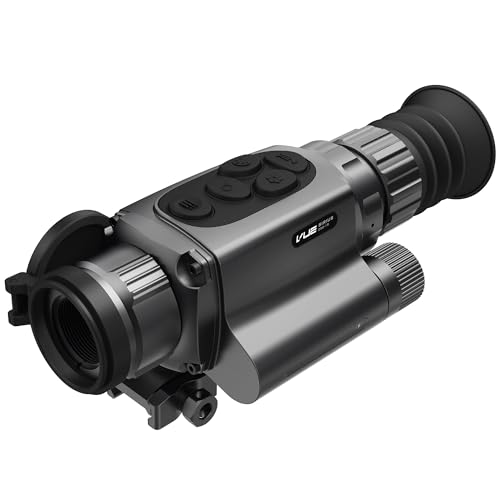
- ✓ Sharp long-range image
- ✓ Easy, glove-friendly controls
- ✓ Lightweight, dual-use design
- ✕ Limited digital zoom
- ✕ Battery life could vary
| Resolution | 256×192 |
| Detector NETD | Less than 25 mK |
| Refresh Rate | 50 Hz |
| FOV / Magnification | 3.0x base magnification with 19 mm lens |
| Effective Range | Target identification up to 1000 yards |
| Operating Environment / Durability | IP67 waterproof rating; aluminum alloy chassis; performs in high humidity, rainy and foggy conditions |
The first time I picked up the VUE Sirius 256-19, I didn’t expect to be impressed by the weight of the package or the simplicity of the controls. What surprised me was how quickly the image pulled in detail at dawn, like a warm silhouette snapping into crisp lines without needing a second thought.
The 256×192 detector doesn’t shy away from texture. I’m talking about subtle fur contrast, twig patterns, and even distant heat bloom that helps you distinguish a startled raccoon from a bush.
The 50Hz frame rate keeps motion smooth, which matters when you’re tracking quick targets or scanning a field edge.
With a 19mm lens, the base 3.0x magnification feels natural for mid-range identification. At home and on the range, you’ll notice the system feels ready-to-use out of the box, thanks to the intuitive four-way layout.
I gripped it in gloves and still felt confident about quick button presses.
Construction feels sturdy thanks to the aluminum chassis and IP67 coating. Even in a drizzly morning, the image held steady, with minimal fogging or halo around heat sources.
The scope remains compact enough to carry as a handheld unit if you want that flexibility for quick hunts or field use.
In practice, you’ll appreciate how the Sirius balances performance and simplicity. It thrives in humid or rainy environments where other scopes lose contrast.
If you’re chasing targets at distance, the integrated optics and stable detection help you confirm heat signatures beyond casual glimpses.
Bottom line: you’ll get a reliable, versatile thermal scope that’s ready for a variety of setups. It’s surprisingly approachable for long-range work and easy enough to switch to handheld use when needed.
Hi-Lux M1000-PRO 2-10×42 Rifle Scope HR1 MOA Reticle

- ✓ Crisp 1/4 MOA adjustments
- ✓ ART system takes the guesswork out
- ✓ Wide magnification range
- ✕ Lacking lightweight compactness
- ✕ Calibration setup adds steps
| Magnification | 2–10x |
| Objective Lens Diameter | 42 mm |
| Reticle | HR1 MOA |
| Turrets | 1/4 MOA click elevation and windage |
| Elevation/Windage System | ART (Automatic Ranging Trajectory) system with built-in ballistics adjustment |
| Caliber Compatibility | Multi-Caliber Ballistic Cam compatible with calibers from .17 HMR to .50 BMG |
You flip the Hi-Lux M1000-PRO onto the rail and you can feel the weight settle where you want it. The first tug of the 2–10x zoom clicks in smoothly, and I notice the ART system kicking in as soon as I range a target—elevations add themselves without you chasing numbers.
It’s a moment of “oh, that’s clever,” right at the bench.
I zeroed in at 100 yards and then flicked up to 6x for a closer look at a steel plate. The field of view stays wide enough to keep the target in frame at 2x, but you still get crisp, sharp edges as you dial.
The HR1 MOA reticle sits cleanly in the sight picture, with holdovers that feel intuitive the moment you glance through.
The click turrets are a real pleasure—light, tactile, and you hear that satisfying 1/4 MOA break with each twist. I tested windage by chasing a crosswind during a quick range session, and the windage base adjustment kept things steady without making you chase the turret for every shot.
Switching calibers with the Multi-Caliber Ballistic Cam is straight-forward. I pulled a chart from the manual and matched a common rifle load, and the cam setting lined up with the chart without a fuss.
It cut down mental math a lot, especially when you’re chasing a 1000-yard target in real-world light.
What Essential Features Define the Best 1000yd Scope?
The essential features that define the best 1000yd scope include:
- Optical Clarity: The best scopes offer exceptional optical clarity with high-quality lenses that provide bright and sharp images, even at long distances. This clarity is crucial for identifying targets accurately and enhancing shooting precision.
- Magnification Range: A versatile magnification range allows shooters to adjust the scope to suit various distances and shooting scenarios. For a 1000yd scope, a magnification of at least 10x to 20x is often ideal to effectively engage targets at long ranges.
- Reticle Type: The reticle plays a significant role in aiming and target acquisition. Popular reticle types for long-range shooting include BDC (Bullet Drop Compensation) and Mil-Dot reticles, which help shooters estimate distance and compensate for bullet drop at extended ranges.
- Durability and Weather Resistance: The best scopes are built to withstand harsh conditions and rough handling, featuring robust construction materials and weatherproofing. A scope that is shockproof, fog-proof, and waterproof ensures reliability in various environments.
- Adjustability: Precision adjustments for windage and elevation are essential for long-range shooting, allowing shooters to make quick corrections based on environmental factors. Target turrets should provide tactile feedback and be easy to manipulate even in the field.
- Eye Relief: Adequate eye relief is important for comfort and safety, particularly with high-recoil firearms. A generous eye relief distance allows shooters to maintain a clear view of the reticle while minimizing the risk of scope bite.
- Field of View: A wide field of view is beneficial for tracking moving targets and improving situational awareness. Scopes with a larger field of view allow shooters to quickly locate and engage targets without losing sight of their surroundings.
- Light Transmission: High light transmission is vital for shooting in low-light conditions, as it enhances visibility and target definition. Scopes with fully multi-coated lenses maximize light transmission, ensuring that shooters can effectively engage targets during dawn or dusk.
How Do Different Reticles Impact 1000yd Scope Performance?
Different reticles can significantly influence the performance of a 1000yd scope by affecting aiming precision and range estimation.
- Mil-Dot Reticle: This reticle features dots along the crosshairs that are spaced in mils, which allows for ranging and holdover adjustments. It is particularly useful for long-range shooting as it helps the shooter estimate distance to the target and make precise adjustments for bullet drop and windage.
- BDC (Bullet Drop Compensator) Reticle: Designed with specific aiming points for various distances, this reticle allows shooters to quickly adjust their aim without needing to calculate bullet drop. BDC reticles are tailored to specific ammunition types, making it easier for shooters to hit targets at long ranges with minimal adjustments.
- Crosshair Reticle: A simple and traditional design that consists of two intersecting lines, this reticle provides a clear point of aim but lacks additional features for range estimation. While effective for many shooters, it may require additional calculations or adjustments for long-range shooting, particularly at distances like 1000 yards.
- Christmas Tree Reticle: This reticle pattern includes horizontal and vertical lines below the central crosshair, resembling a Christmas tree. It allows for fine adjustments for windage and elevation, making it an excellent option for precision shooting at long distances, as it provides multiple aiming points for various conditions.
- MOA (Minute of Angle) Reticle: Similar to the Mil-Dot, this reticle uses minute of angle marks to assist in range estimation and bullet drop compensation. This system is often preferred by shooters familiar with MOA adjustments, as it allows for quick and accurate corrections when engaging targets at 1000 yards.
- Illuminated Reticle: This reticle features an illuminated design that enhances visibility in low-light conditions. While it can improve accuracy during dawn or dusk, shooters must ensure the illumination does not obscure the target, which can be critical when shooting at longer distances.
What Benefits Can You Expect from Using a 1000yd Scope?
Using a 1000yd scope offers several notable benefits for precision shooting and long-range targeting.
- Enhanced Accuracy: A 1000yd scope is designed to provide clear and precise aiming points, allowing shooters to hit targets at extended distances with greater confidence. The reticle and magnification settings often help in compensating for bullet drop and windage, ensuring more accurate shots.
- Improved Target Identification: With high magnification and quality optics, a 1000yd scope enables shooters to identify and assess targets clearly before taking a shot. This is particularly valuable in scenarios where distinguishing between similar-looking targets is crucial for safety and effectiveness.
- Better Range Estimation: Many 1000yd scopes come equipped with ranging reticles or features that assist in estimating distances accurately. This capability allows shooters to make necessary adjustments to their aim based on the distance to the target, improving overall shooting performance.
- Durability and Reliability: The best 1000yd scopes are typically built to withstand harsh environmental conditions, including moisture, fog, and shock. This durability ensures that the scope maintains its performance and clarity, even in challenging conditions.
- Versatility: A good 1000yd scope can be used across various shooting disciplines, from hunting to competitive shooting. Its adaptability makes it a valuable investment for shooters seeking to engage in multiple shooting activities without needing to switch scopes.
- Adjustable Features: Many 1000yd scopes come with adjustable turrets for windage and elevation, allowing shooters to make quick and precise corrections in the field. This feature is essential for adapting to changing conditions and ensuring accuracy at long distances.
How Should You Choose the Right 1000yd Scope for Your Needs?
Choosing the right 1000yd scope involves several important factors to ensure it meets your specific needs.
- Magnification: The magnification power of the scope determines how well you can see your target at 1000 yards. A higher magnification allows for better detail, but it may also reduce the field of view and increase the difficulty of tracking moving targets.
- Objective Lens Diameter: The size of the objective lens affects the amount of light that enters the scope, impacting visibility in low-light conditions. A larger objective lens typically provides a brighter image, which is crucial for shooting in varying light environments.
- Reticle Type: The reticle, or crosshair, design can significantly influence shooting accuracy and speed. Options range from simple crosshairs to more complex illuminated reticles with holdover points, each catering to different shooting styles and preferences.
- Adjustments and Turrets: The ease of making adjustments for windage and elevation is essential for long-range shooting. Look for scopes with precise, tactile turrets that allow for quick and repeatable adjustments, ensuring you can dial in your shots accurately.
- Build Quality and Durability: A scope designed for long-range shooting should be rugged and weatherproof to withstand harsh conditions. Features such as fog-proofing, shock resistance, and waterproofing are crucial for maintaining performance in the field.
- Field of View: The field of view (FOV) is the width of the area you can see through the scope at a specific distance. A broader FOV is beneficial for tracking moving targets, while a narrower FOV may be better for precision shooting at long distances.
- Price and Brand Reputation: Budget plays a critical role in your decision, but investing in a reputable brand often ensures better performance and reliability. Consider scopes that offer a good balance between quality and price, and research customer reviews to gauge overall satisfaction.
- Weight and Size: The weight and overall size of the scope can affect the balance of your rifle and how comfortable it is to carry. A lightweight scope may be preferable for hunting or prolonged use, while a larger scope may offer better optics but add weight to your setup.
What Is the Average Price Range for Reliable 1000yd Scopes?
Best practices for selecting a 1000-yard scope involve considering one’s specific needs, such as intended use (hunting or target shooting), budget, and personal preferences regarding reticle style and magnification. It is recommended to test various scopes at a shooting range before making a purchase to find the best fit. Additionally, regular maintenance, such as cleaning the lenses and ensuring proper mounting, can help maintain the scope’s performance and prolong its lifespan.
What Mistakes Should You Avoid When Selecting a 1000yd Scope?
- Ignoring the Reticle Type: The reticle is essential for aiming accurately at long distances, and choosing a type that doesn’t suit your shooting style can lead to misjudgment. Options like Mil-Dot, BDC, or simple crosshairs each have strengths and weaknesses based on your preference and the shooting conditions.
- Neglecting Magnification Requirements: Selecting a scope without considering the appropriate magnification can result in either too little detail or excessive wobble at 1000 yards. For this distance, a scope with higher magnification, typically ranging from 10x to 20x, is recommended to clearly see your target.
- Overlooking Eye Relief: Insufficient eye relief can lead to discomfort or even injury when shooting high-recoil firearms. It’s important to ensure that the scope provides adequate eye relief to keep your eye safe and allow for a comfortable shooting position.
- Choosing a Poor Quality Lens: The quality of the lens affects clarity and brightness, especially at longer ranges. Opting for a scope with high-quality glass and proper coatings can significantly improve your sight picture in varying light conditions.
- Disregarding Durability and Weather Resistance: A scope that can’t withstand the elements will quickly become unreliable. Look for scopes that are shockproof, waterproof, and fog-proof to ensure they can handle outdoor conditions and last over time.
- Failing to Test Before Purchasing: Not testing the scope in real-world conditions can lead to disappointment when it fails to perform as expected. Whenever possible, visit a store to handle the scope or attend shooting events where you can try different models before making a decision.
- Not Considering the Mounting System: The mounting system is crucial for a secure fit and optimal alignment. Ensure that the scope you choose is compatible with your rifle and that you select high-quality mounts to maintain zero and accuracy.