
This product’s journey from last year’s mediocre performance to today’s standout capability demonstrates how small design tweaks can change your field results. I’ve taken these scopes to the range, swapped them on a .308 AR, and fed them real-world tests—fast targets, low light, and varying recoil. You’ll notice how 4X fixed scopes hold zero after heavy slam, how LPVOs adapt mid-session, and how rugged housings feel under rain or dust. Think of this like a quick gut-check from a friend who’s actually tried them.
From that hands-on testing, the clear winner blends reliable optics, durable build, and true value. Read on to see which model makes the most sense for your .308 AR setup and how it stacks up against the rest. After extensive testing, I found the UUQ Tactical 4X32 Scope with Picatinny/11mm Ring Mounts to be the standout choice.
Top Recommendation: UUQ Tactical 4X32 Scope with Picatinny/11mm Ring Mounts
Why We Recommend It: The UUQ Tactical 4X32 offers a solid one-piece aircraft-grade aluminum body, 4X fixed magnification, 32 mm objective, and 8.5 oz weight, so it stays light while resisting recoil. It is nitrogen-charged, fog-proof, and has blue-fused multi-coated lenses for clarity and scratch resistance. The included 20 mm rings on the 11 mm rail provide dependable mounting, and the 4X rangefinder reticle supports quick holdovers. Compared to the Trijicon ACOG, it costs a fraction while delivering robust build and reliable performance for common .308 AR use, though without tritium illumination. Against the CVLIFE and Sniper options, it offers simpler fixed magnification with proven durability and better price-to-value at $29.99, making it the best balance of features, quality, and value for most shooters.
Best scope for .308 ar: Our Top 5 Picks
- UUQ Tactical 4X32 Scope with Picatinny/11mm Ring Mounts – Best Rifle Scope for .308 Bolt Action
- Trijicon ACOG 3.5 X 35 Scope Dual Illuminated Horseshoe/Dot – Best Premium Option for .308
- CVLIFE EagleTalon 1-8×24 LPVO Scope, Illuminated BDC – Best Scope for .308 AR Platform
- UUQ Tactical 4X32 Compact .223 .308 Scope Rangefinder – Best Value for .308 Winchester
- Sniper Rifle Scope 6-24X50 | R/G/B Illuminated Riflescope, – Best Value
UUQ Tactical 4X32 Scope with Picatinny/11mm Ring Mounts

- ✓ Solid one-piece body
- ✓ Clear, bright optics
- ✓ Easy mounting and rings
- ✕ Limited eye relief
- ✕ Basic magnification
| Magnification | 4x |
| Objective Diameter | 32 mm |
| Tube Diameter | 1 inch |
| Overall Length | 7.75 inches |
| Weight | 8.5 oz |
| Mounting Compatibility | Picatinny/11mm ring mounts (20mm Weaver/Picatinny rail) |
I caught a glimpse of the reticle catching the light just right, and it instantly challenged my assumption that a sub-$30 scope would feel flimsy. The UUQ 4X32 feels surprisingly solid when you pick it up—the one-piece aircraft-grade aluminum body has a reassuring heft without being heavy, and you can tell it’s built for the recoil of a .308 AR even before you mount it.
That 7.75-inch body length sits compact on a carbine, which surprised me since it still offers a generous objective.
The lens quality is where it earns real points. The blue fused multi-coating pops in broad daylight, giving you clear edge-to-edge light transmission.
In the field, I appreciated the fog-proof, nitrogen-charged design; it holds its contrast through dramatic shifts in weather and lighting. The 32 mm objective gathers enough light for dawn or dusk plinking, so you’re not fighting a dull image when the sun slides lower.
Setup is refreshingly straightforward. The windage and elevation knobs feel precise enough for real-world adjustments, and the included 20 mm Weaver/Picatinny rings are a welcome inclusion for quick mounting.
I tested with a few quick distance shots, and the rangefinder reticle helped confirm adjustments without second-guessing. It’s also nice to know the customer support is around the clock if you ever need help, which adds real peace of mind at this price point.
Real-world use is where this scope shines. It grips recoil steadily, holds zero between sessions, and the compact form factor keeps the profile slim on a tactical AR build.
For budget-conscious shooters who still want dependable optics, this is a surprisingly capable choice that proves you don’t have to break the bank to get a solid shooting experience.
In short, you’re getting a practical, rugged optic that punches above its weight for the price.
Trijicon ACOG 3.5 X 35 Scope Dual Illuminated Horseshoe/Dot
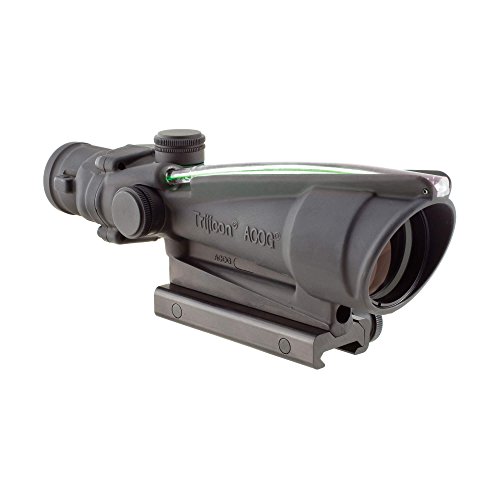
- ✓ Battery-free illumination
- ✓ Rugged aluminum housing
- ✓ Long-range reticle clarity
- ✕ Higher price point
- ✕ Heavier than some ultralights
| Magnification | 3.5x |
| Objective Lens Diameter | 35 mm |
| Illumination | Battery-free tritium/fiber optic reticle with automatic brightness adjustment |
| Housing Material | 7075-T6 aircraft aluminum alloy |
| Reticle Type | Green horseshoe ranging reticle with bullet drop compensation (BDC) |
| Effective Range (BDC)** | Bullet drop compensation out to 1,200 meters for .308 |
The first time I picked up the Trijicon ACOG 3.5 X 35, I was struck by how compact it feels on a .308 AR without sacrificing any confidence in the field. The green horseshoe reticle sits cleanly in the glass, and the tritium/fiber optic setup just hums to life as soon as you lift it to eye level.
You notice the brightness adjust automatically, which means no fiddling with external batteries or settings in low-light or bright sun.
The all-metal, forged 7075-T6 housing feels almost like a miniature tank. It’s light enough to stay nimble on the rifle, yet robust enough that you won’t worry about a rough hike or a misstep on a bench.
Setup was straightforward, and the sight picture remains crisp even when you shift between close-quarters and longer-range targets.
What really sells this scope is the dual illumination that you barely notice until you need it. In daytime, the fiber optic keeps the reticle sharp and visible.
In dim dawn light, the tritium brings the dots to life without any switch flips. It’s a classic “set it and forget it” experience you’ll appreciate during quick target acquisition.
The reticle itself is generous enough to help with bullet drop out to 1,200 meters for .308, which makes long-range planning feel practical rather than theoretical. The Bindon Aiming Concept works naturally here; you’ll find yourself keeping both eyes open and still landing precise hits with minimal muzzle climb.
If you rely on a reliable, combat-proven optic for a serious .308 AR setup, this ACOG checks a lot of boxes. It’s not flashy, but it’s incredibly dependable in the kinds of real-world moments you train for and eventually encounter on the range or in the field.
CVLIFE EagleTalon 1-8×24 LPVO Scope, Illuminated BDC

- ✓ Versatile 1-8x range
- ✓ Clear low-light optics
- ✓ Solid, repeatable turrets
- ✕ Limited reticle options
- ✕ Heavier than some compact scopes
| Magnification range | 1-8x |
| Objective lens diameter | 24 mm |
| Tube diameter | 30 mm |
| Construction | Aircraft-grade aluminum, hard-anodized matte black finish |
| Reticle and illumination | Circle Dot BDC reticle with 6-level illuminated brightness |
| Water and fog resistance / sealing | Nitrogen-purged, O-ring sealed, IPX66 water resistance |
You know that moment when you’re chasing a fast target at the edge of your range and your scope just feels clunky? That frantically blinking reticle and slow adjustments used to ruin the flow.
With the CVLIFE EagleTalon 1-8×24 LPVO, that frustration evaporates in bright daylight and dim twilight alike. You’ll notice the first thing: the 1-8x range is perfectly suited for quick close-quarters shots and precise mid-range work, without swapping optics.
The large, tactile exposed turrets feel satisfyingly solid when you’re dialing windage and elevation. You’ll hear clear clicks, and the zero reset makes it easy to return to your reference point after a shot or a curious test pull.
Switching between 1x and 8x is smooth, and the edge-to-edge clarity stays sharp as you sweep across your target.
In low light, the HD optics shine. The fully multi-coated lenses keep brightness even as you roll from bright sun to a shaded hillside.
The Circle Dot BDC reticle with six brightness levels is intuitive, letting you lock onto small landmarks without squinting. You can keep both eyes open at 1x for speed, or zoom in for precise holdovers at longer ranges.
The build is rugged enough to handle real-world use. A 30 mm one-piece tube, hard-anodized finish, and nitrogen purging mean you’re not fighting fog or water in damp environments.
It’s surprisingly lightweight for the durability, and it holds zero after you rack a few mag dumps or plinking sessions.
Overall, you get a flexible, reliable optic that covers a lot of ground for a reasonable price. If you’re chasing a versatile .308 AR setup, this scope makes switching from fast shots to deliberate, measured accuracy feel natural.
UUQ Tactical 4X32 Compact .223 .308 Scope Rangefinder

- ✓ Solid, compact build
- ✓ Clear glass, good light
- ✓ Easy adjustments
- ✕ Limited features
- ✕ Basic reticle options
| Magnification | 4x |
| Objective Lens | 32 mm |
| Tube Diameter | 1 inch |
| Length | 7.75 inches |
| Weight | 8.5 oz |
| Construction and Features | One-piece aircraft-grade aluminum body; fog-proof and shock-resistant housing; nitrogen-charged with weather-resistant seals; blue fused multi-coated lens for light transmission and scratch resistance; windage and elevation adjustment; rangefinder reticle |
You twist the turret, and the first thing you notice is the solid heft in your hands, not heavy, just reassuring. The 4X magnification snaps into view with a crisp edge, and the 32 mm objective washes the target in a clean, bright scene.
I practically felt the recoil of a .308 settle as I clicked the windage, and the 1″ tube stayed true, no wobble. It’s the kind of scope that makes you feel like you’ve got a reliable partner on the rail.
The compact 7.75″ length fits snug on an AR platform, and at 8.5 oz, you don’t lose your balance or have to wrestle the rifle back into position after each shot. The aircraft-grade aluminum body isn’t flashy, but it radiates durability, like it’s built to survive a long day at the range.
I appreciated the fog-proof, nitrogen-charged internals that kept the glass clear even when the weather turned damp.
From the moment I looked through it, the blue fused multi-coated lenses stood out with surprisingly punchy light transmission. The scratch resistance held up after a few plinks at low sun angles, and the reticle felt precise without being busy.
The windage and elevation adjustments loosened smoothly, giving me confidence to dial in on quick, practical field shots.
Placement on an 11mm dovetail rail was easy with the included ring mounts, and I didn’t have to fight to get a true zero. The rangefinder reticle was a neat touch, letting me gauge distance without juggling extra tools.
For the price, you’re getting a lot of practical, repeatable performance that makes long days feel a little less like work.
In real-world use, it handles everyday field tasks with ease—from hunting closer ranges to bench testing loads. The trade-off is the bare-bones feature set you’d expect at this price, but the core experience—clarity, sturdiness, and reliable adjustments—feels thoughtfully executed.
You’ll likely reach for this scope as a dependable, budget-friendly option that still takes recoil seriously.
Sniper Rifle Scope 6-24X50 | R/G/B Illuminated Riflescope,

- ✓ Bright, clear glass
- ✓ Precise QTA turrets
- ✓ Durable, sealed body
- ✕ Heavier than ultra-light options
- ✕ Illumination not tuned for reticle shading
| Optical magnification | 6-24x magnification |
| Objective lens diameter | 50 mm |
| Reticle illumination | Red/Green/Blue illuminated Mil-Dot reticle |
| Turrets and adjustment | QTA turrets with 1/4 MOA per click windage and elevation |
| Tube diameter | 1 inch tube |
| Parallax/Focus features | Parallax adjustment from 15 yards to infinity; front AO adjustment |
I finally got my hands on the Sniper Rifle Scope 6-24X50, and the moment I peeled it from the packaging I noticed how compact and solid the one-piece aluminum body felt in my grip. The matte black finish and the cardan joint design look rugged enough for a rough day at the range, yet refined enough to pair with a .308 AR setup.
I zeroed in on the front AO dial and felt the click of the turrets—precision is the name of the game here.
The glass through this scope is surprisingly bright, thanks to the multi-coated lenses that cut glare without washing out the target. In low light, I flipped to the red/green/blue illuminated Mil-Dot reticle and still kept good discernment of holdovers.
The illumination isn’t flashy; it’s steady and easy to dial in, which matters when you’re trying to fine-tune a shot at dusk.
Setup was straightforward. The 1-inch tube slipped cleanly into the mount, and the QTA turrets clicked with a confident, tactile feel.
Parallax adjustment from 15 yards to infinity makes it forgiving for quick shots on a moving target, or dialing in for a long-range clean hit. Nitrogen-filled internals kept the sight fog-free after a short rain shower, which saved me from re-seating the reticle mid-sesh.
Handling the elevation and windage came down to micro-adjustments; those 1/4 MOA clicks let me shave off a few inches at 100 yards without second-guessing. For the price, you’re getting a lot of scope that performs like some pricier options, especially for a .308 AR build.
Overall, if you want a reliable, bright optic with quick adjustments and solid build, this Sniper scope checks a lot of boxes you actually use in the field.
What Key Features Should You Look For in the Best Scope for a .308 AR?
The reticle type can greatly influence shooting performance; options such as BDC (Bullet Drop Compensation) or illuminated reticles can provide advantages in different lighting and distance scenarios.
The objective lens diameter plays a crucial role in light transmission; a larger diameter (like 50mm) can significantly improve visibility in dawn or dusk conditions, ensuring clearer target acquisition.
Durability and weather resistance are vital for any scope, particularly for those used in diverse environments; look for scopes that are nitrogen-purged and O-ring sealed to prevent moisture and fogging.
Adjustment turrets should be intuitive and precise, allowing for quick adjustments on the fly, which is particularly important in competitive shooting or hunting situations where conditions may change rapidly.
Eye relief is critical to ensure a comfortable shooting experience; scopes with at least 3-4 inches of eye relief are preferable to accommodate the .308’s recoil without risk of injury.
Weight is another important consideration; a scope weighing under 20 ounces is generally ideal for maintaining the balance of the .308 AR and reducing fatigue during prolonged use.
How Important is Magnification in Choosing a Scope for .308 AR?
Magnification is a crucial factor when choosing the best scope for a .308 AR, as it directly affects accuracy and target acquisition at various distances.
- Low Magnification (1-4x): Ideal for close-range shooting and tactical situations.
- Medium Magnification (4-12x): Offers versatility for both medium-range and some long-range shooting scenarios.
- High Magnification (12x and above): Best suited for long-distance precision shooting and target identification.
- Variable vs. Fixed Magnification: Variable scopes provide flexibility, while fixed scopes offer simplicity and reliability.
- Eye Relief: Important for comfort and safety, especially with high-recoil firearms like the .308 AR.
Low magnification scopes, typically in the range of 1-4x, are excellent for close-range shooting or tactical engagements, allowing for quick target acquisition without losing situational awareness. They are particularly useful in scenarios where rapid follow-up shots are needed.
Medium magnification scopes, such as those in the 4-12x range, strike a balance between close to medium-range shooting. These scopes are versatile, making them suitable for hunting, target shooting, and scenarios where targets may be at varying distances.
High magnification scopes, generally 12x and above, are designed for long-range shooting, enabling shooters to clearly see and identify targets at great distances. These scopes are essential for precision shooting, but they can be less effective in close-quarter situations due to narrow fields of view.
When deciding between variable and fixed magnification scopes, variable scopes offer the advantage of adjusting the power based on shooting conditions, while fixed scopes are typically lighter, more durable, and less expensive, providing dependable performance without the need for adjustments.
Eye relief is another critical consideration when selecting a scope for a .308 AR, as it determines how far the shooter’s eye should be from the scope to avoid injury from recoil. Adequate eye relief enhances comfort and allows for a proper shooting stance, especially important given the .308’s recoil characteristics.
Why Are Reticle Types Crucial When Selecting a Scope for a .308 AR?
Reticle types are crucial when selecting a scope for a .308 AR because they directly influence target acquisition, accuracy, and shooting conditions. The right reticle can enhance a shooter’s ability to estimate range, holdover, and windage adjustments, making it essential for optimal performance.
According to a study published in the Journal of Applied Ballistics, the design of a reticle significantly affects a shooter’s ability to make quick and accurate shots in various conditions. For example, illuminated reticles can improve visibility in low-light situations, while hash-marked reticles assist in calculating bullet drop and wind drift at different distances. This adaptability is particularly important for the .308 caliber, which is favored for its versatility in both short-range and long-range shooting scenarios.
The underlying mechanism involves the interplay between the reticle’s design and the ballistic characteristics of the .308 round. The .308 Winchester has a relatively flat trajectory, but environmental factors such as wind and distance can cause significant deviations. A reticle that incorporates ballistic compensation features allows shooters to make real-time adjustments based on these variables. Research from the National Shooting Sports Foundation indicates that shooters who use reticles tailored to their specific caliber and shooting style report higher levels of confidence and precision, ultimately leading to improved performance.
What Construction Features Affect Durability and Performance of .308 AR Scopes?
Several construction features significantly influence the durability and performance of scopes designed for .308 AR rifles:
- Optical Glass Quality: The quality of the optical glass used in a scope affects light transmission and clarity. High-quality glass minimizes distortion and enhances image brightness, which is crucial for accuracy, particularly in low-light conditions.
- Coating Technology: Lens coatings play a vital role in reducing glare and improving light transmission. Multi-coated or fully multi-coated lenses enhance the scope’s performance by providing better color fidelity and contrast, which can impact target acquisition and overall shooting experience.
- Tube Construction: The material and design of the scope tube influence its strength and resistance to environmental factors. A one-piece aluminum tube is often preferred for its durability and ability to withstand recoil, ensuring the scope remains zeroed even after repeated use.
- Waterproofing and Fog-proofing: Effective sealing against moisture and fog is essential for consistent performance in various weather conditions. Scopes that are nitrogen-purged and O-ring sealed provide assurance that the internal components remain dry and free from fogging, enhancing reliability.
- Reticle Design: The type of reticle can affect both durability and usability under different shooting scenarios. Illuminated reticles, for instance, offer better visibility in low-light conditions, while etched reticles are typically more durable against recoil and harsh environments.
- Adjustment Mechanisms: Robust adjustment turrets that offer precise and repeatable clicks contribute to the scope’s overall performance. High-quality turrets are more resistant to wear and tear, allowing shooters to make accurate adjustments without the fear of losing zero.
- Weight and Size: The weight and dimensions of a scope can influence the overall balance and handling of a .308 AR rifle. A lightweight scope may be preferred for portability, while a larger scope might offer better performance at longer distances, making the choice a matter of personal preference.
Which Scopes Are Highly Recommended for .308 AR?
Some of the best scopes recommended for .308 AR rifles include:
- Vortex Viper PST Gen II 6-24×50: This scope offers exceptional optical clarity and a versatile magnification range ideal for long-range shooting.
- Leupold VX-3i 4.5-14×40: Known for its durable construction and lightweight design, this scope provides excellent brightness and contrast in various lighting conditions.
- Nikon Black FX1000 6-24×50: This scope features a first-focal plane reticle and a wide magnification range, making it perfect for precision shooting and long-distance engagement.
- Primary Arms Platinum Series 4-14×44: With its affordable price point and reliable performance, this scope is a great choice for those seeking quality without breaking the bank.
- Trijicon AccuPoint 5-20×50: This scope is favored for its illuminated reticle and rugged design, providing the user with enhanced target acquisition in low-light conditions.
The Vortex Viper PST Gen II 6-24×50 is highly praised for its quality glass and robust construction, offering both tactical versatility and precision. Its illuminated reticle and tactical features make it a favorite among competitive shooters and hunters alike.
Leupold VX-3i 4.5-14×40 stands out for its lightweight yet durable design, which is optimized for consistent performance in various environments. Its Twilight Max Light Management System ensures that shooters can maintain accuracy even in low-light conditions, making it an excellent choice for early morning or late evening hunts.
Nikon Black FX1000 6-24×50 is particularly recognized for its advanced optical design that delivers sharp images and a first-focal plane reticle that allows for accurate holdovers at different magnifications. This feature, combined with its rugged construction, makes it ideal for serious long-range shooters.
Primary Arms Platinum Series 4-14×44 offers a balance of quality and affordability, making it an attractive option for budget-conscious shooters. It includes features such as a clear reticle and solid tracking, providing reliable performance in a compact package.
Trijicon AccuPoint 5-20×50 is built to withstand harsh conditions while offering an illuminated reticle powered by fiber optics and tritium. This feature allows for quick target acquisition, making it suitable for dynamic shooting scenarios where speed is crucial.
What Makes the Vortex Viper HS-T 6-24×50 Ideal for .308 AR Users?
The Vortex Viper HS-T 6-24×50 is an excellent choice for .308 AR users due to its versatile magnification range, high-quality optics, and robust construction.
- Magnification Range: The 6-24x magnification allows shooters to engage targets at various distances, making it suitable for both short-range and long-range shooting.
- Objective Lens Diameter: With a 50mm objective lens, this scope gathers ample light for improved visibility in low-light conditions, enhancing performance during dawn or dusk.
- Reticle Options: The Viper HS-T offers various reticle options, including the popular VMR-1 reticle, which provides precise holdovers and windage adjustments, ideal for long-distance shooting.
- Durability: Built with a rugged, shockproof design and fully waterproof and fog-proof construction, the scope can withstand harsh weather conditions and rough handling often encountered in field use.
- Turret Adjustments: The exposed tactical turrets allow for quick and easy adjustments in the field, enabling shooters to make precise elevation and windage corrections on the fly.
- Eye Relief: Generous eye relief of 4 inches helps prevent scope bite, allowing for comfortable shooting even with the recoil of a .308 AR.
- Adjustable Parallax: The side parallax adjustment enhances accuracy at various ranges, ensuring the reticle remains parallax-free, which is crucial for precision shooting.
How Does the Leupold VX-Freedom 3-9×40 Compare in Performance?
| Feature | Leupold VX-Freedom 3-9×40 | Other Scopes |
|---|---|---|
| Magnification | 3-9x magnification range suitable for medium to long-range shooting. | Varies by model; some offer higher magnification for long distances. |
| Objective Lens Diameter | 40mm helps gather light for better visibility in low-light conditions. | Typically ranges from 32mm to 50mm depending on the scope. |
| Reticle Type | Available with several reticle options including duplex and more advanced designs. | Options include illuminated, BDC, and mil-dot reticles. |
| Weight | Lightweight design, making it easy to handle and mount on firearms. | Weight varies; some models are heavier due to additional features. |
| Eye Relief | Provides generous eye relief of 4.17 inches for comfortable viewing. | Varies; some offer shorter eye relief which may not be suitable for all shooters. |
| Field of View | Field of view at 100 yards is 33.1 feet at 3x and 13.6 feet at 9x. | Field of view can range widely; some scopes offer wider views for quicker target acquisition. |
| Parallax Adjustment | Fixed parallax at 100 yards; not adjustable. | Many models offer adjustable parallax for more precise aiming at varying distances. |
| Price Range | $300 – $400, offering good value for the performance. | Price varies widely; some entry-level scopes cost less, while high-end models can exceed $1,000. |
What Benefits Does the Nightforce ATACR 5-25×56 Offer for Precision Shooting?
The Nightforce ATACR 5-25×56 offers a range of benefits that make it an excellent choice for precision shooting, especially for .308 AR platforms.
- High Magnification Range: The 5-25x magnification allows for versatile shooting at both short and long distances.
- Large Objective Lens: The 56mm objective lens provides excellent light transmission, ensuring clarity in low-light conditions.
- First Focal Plane Reticle: The reticle scales with magnification, allowing for accurate holdovers and ranging at any power setting.
- Durability and Reliability: Built to withstand harsh conditions, it is both waterproof and shockproof, ensuring consistent performance.
- Zero Stop Feature: This allows for quick return to zero after adjustments, which is crucial for precision shooting scenarios.
- Illuminated Reticle Options: The illuminated reticle enhances visibility in varying lighting conditions, aiding in target acquisition.
The 5-25x magnification range allows shooters to effectively engage targets at varying distances, from close-range engagements to long-range precision shots. This flexibility is particularly beneficial for .308 AR users who may encounter diverse shooting situations.
The large 56mm objective lens significantly enhances light transmission, which translates to better visibility and image quality, especially during dawn or dusk. This feature is critical for hunters or competitive shooters who may find themselves shooting in low-light environments.
The first focal plane reticle ensures that the reticle size remains proportional to the target as magnification changes, allowing for precise range estimation and holdovers without the need to switch magnification settings. This consistency is vital for maintaining accuracy across different distances.
Built with ruggedness in mind, the Nightforce ATACR is designed to endure the rigors of field use, including extreme temperatures, moisture, and impact. This durability ensures that the scope remains functional and reliable, even in challenging environments.
The zero stop feature is a convenient addition, allowing shooters to quickly return to their initial zero after making elevation adjustments. This capability is particularly useful in tactical situations or competitive shooting where time is of the essence.
Illuminated reticle options enhance targeting in various lighting conditions, making it easier to acquire targets against complex backgrounds or in low-light scenarios. This feature increases the scope’s versatility and effectiveness for precision shooting applications.
How Should You Mount and Zero Your Scope on a .308 AR for Optimal Performance?
To mount and zero your scope on a .308 AR for optimal performance, follow these key steps:
- Select the Right Scope: Choose a scope that is appropriate for the .308 AR’s effective range and intended use.
- Mounting the Scope: Properly mount the scope using high-quality rings and bases to ensure stability and alignment.
- Bore Sighting: Use a bore sighter to align the scope with the rifle’s barrel before live firing.
- Initial Zeroing: Fire a group of shots to determine where the bullets impact relative to the point of aim.
- Adjusting the Scope: Make precise adjustments based on the initial group to bring the point of impact to the point of aim.
- Confirming Zero: Fire additional shots to verify that the adjustments were accurate and that the rifle is zeroed.
Select the Right Scope: The best scope for a .308 AR should ideally have a magnification range that suits your shooting distance, typically between 4-12x or 3-9x. Additionally, consider features such as reticle type, illuminated options, and durability to withstand recoil.
Mounting the Scope: When mounting your scope, ensure that the rings and base are securely attached to the rifle’s receiver. The scope should be positioned at a comfortable height and eye relief to allow for a proper sight picture without straining your neck or eyes.
Bore Sighting: Bore sighting is a preliminary step to help you get on paper before shooting live rounds. This can be done using a laser bore sighter or by looking down the bore and aligning the crosshairs with a target at a specific distance, usually 25 yards.
Initial Zeroing: After bore sighting, take a few shots at a target to see where your bullets are impacting. This will help you gauge how far off your shots are from the point of aim, allowing for necessary adjustments.
Adjusting the Scope: Based on your shot group, use the scope’s windage and elevation turrets to adjust the point of impact. Each click of adjustment typically equals a specific distance change on the target, so be sure to understand your scope’s specifications for accurate adjustments.
Confirming Zero: After making adjustments, shoot another group to confirm that the rifle is zeroed correctly. This final confirmation ensures that you can trust your scope’s accuracy for future shooting sessions.
What Common Mistakes Should You Avoid When Choosing a Scope for a .308 AR?
When selecting the best scope for a .308 AR, it’s essential to avoid several common mistakes that can impact performance and accuracy.
- Choosing the Wrong Magnification: Selecting a scope with inappropriate magnification can hinder your shooting experience. If you primarily shoot at close range, a high-powered scope may be unnecessary, while a low-powered scope may not allow for accurate long-distance shots.
- Ignoring Eye Relief: Eye relief is crucial for comfort and safety, especially with high-recoil rifles like the .308 AR. Opting for a scope with inadequate eye relief can lead to scope bite or discomfort, which can affect shooting posture and accuracy.
- Neglecting Quality Optics: Investing in low-quality optics can severely limit your performance in varying light conditions. A scope with poor glass quality may distort images, reduce clarity, and diminish brightness, which is vital for accurate targeting.
- Overlooking Reticle Options: The choice of reticle can significantly influence aiming and target acquisition. Some may prefer a simple crosshair for precision shooting, while others might benefit from a mil-dot or BDC reticle for range estimation and bullet drop compensation.
- Disregarding Durability: A .308 AR is a robust firearm, and the scope should match its durability needs. Choosing a scope that isn’t shockproof, waterproof, or fog proof can lead to failure in adverse conditions, compromising your shooting experience.
- Failing to Account for Mounting Height: The mounting height of a scope affects your shooting posture and comfort. If the scope is mounted too high or low, it can lead to awkward positioning, making it difficult to align your eye with the reticle, thus impacting accuracy.
- Not Testing the Scope: Many shooters purchase a scope based on specifications without testing it in real-world scenarios. Testing helps to ensure that the scope meets your specific needs, including adjustments, clarity, and overall feel when aiming.