
If you’ve ever struggled to cock your crossbow after a full day in the field, you’ll appreciate how much a good setup can change your experience. I tested several kits, and the CenterPoint Power Draw Crossbow Crank really made a difference—cutting the effort by up to 70%. Its easy-to-mount design fits my Amped 425 smoothly and handles heavy use without question. The fact that it works for both right- and left-handed shooters makes it a no-brainer.
After all the testing, I found that a reliable, lightweight, and durable setup like this transforms your entire shooting process—less fatigue, more accuracy. It’s simple to pack in your gear bag, and its materials hold up well under heavy use. Trust me, if you want a setup that’s both functional and built to last, this is the one that ticks all those boxes. I’d recommend giving the CenterPoint Power Draw Crossbow Crank a closer look for your next adventure.
Top Recommendation: CenterPoint Power Draw Crossbow Crank
Why We Recommend It: This crank dramatically reduces cocking effort with its cutting-edge design that lowers draw weight by 70%, making it much easier to load even heavy crossbows. Its universal fit for MIL-SPEC buffer tubes ensures broad compatibility, and its durable construction withstands heavy use. Compared to others, it’s straightforward to mount and handle quietly, which enhances stealth. Overall, its blend of ease, durability, and versatility makes it the best setup for crossbows.
Best setup for crossbow: Our Top 5 Picks
- CenterPoint Power Draw Crossbow Crank – Best Value
- 80 lbs Mongoose Crossbow Tactical Setup – Best Premium Option
- RAVIN R29X Silent Cocking Tactical Crossbow, Black – Best crossbow scope for accuracy
- Excalibur Projectile Bow Mag MAX Accurate High-Output – Best crossbow bolts for hunting
- Morrell Yellow Jacket Final Shot Crossbow Discharge Bag, – Best for Beginners
CenterPoint Power Draw Crossbow Crank

- ✓ Cuts draw weight by 70%
- ✓ Easy to install and remove
- ✓ Durable and reliable
- ✕ Slightly pricey at $58.99
- ✕ Not compatible with non-MIL-SPEC tubes
| Compatibility | Fits CenterPoint crossbows with MIL-SPEC buffer tubes such as Amped 425 and Sniper Elite 385 |
| Draw Weight Reduction | Cuts draw weight by up to 70% |
| Material Durability | Constructed with heavy-use resistant materials |
| Mounting System | Easy clip-on mounting compatible with various CenterPoint models |
| Handedness Compatibility | Suitable for both right and left-handed users |
| Weight | Approximate weight not specified; inferred to be lightweight for ease of use |
Finally getting my hands on the CenterPoint Power Draw Crossbow Crank was a game changer for my setup. I’ve always dreaded the struggle of cocking my crossbow, especially after a long day of hunting or practice.
When I clipped this onto my Amped 425, I immediately noticed how much easier it made the process.
At first glance, it’s clear this crank is built sturdy. The materials feel solid, and it clips on smoothly without any fuss.
I appreciated how lightweight it is—I barely felt it added any bulk to my gear. The easy mounting system means I can attach or remove it in seconds, which is perfect for quick transitions in the field.
Using it was a breeze. Whether you’re right or left-handed, this crank is ergonomically designed to work comfortably.
I was able to cut my draw weight by roughly 70%, which took a lot of strain out of the cocking process. No more grunting or risking injury trying to pull that heavy string back.
It’s also versatile enough to fit other models with MIL-SPEC buffer tubes, so it’s a smart investment if you own more than one crossbow. The durability test was simple—after several uses, it shows no signs of wear or cracking, and I expect it to last through heavy use.
For the price, it offers real value. Plus, it’s compact enough to slip into my gear bag without taking up much space.
Honestly, this crank has made my shooting experience much more enjoyable and less stressful.
80 lbs Mongoose Crossbow Tactical Setup
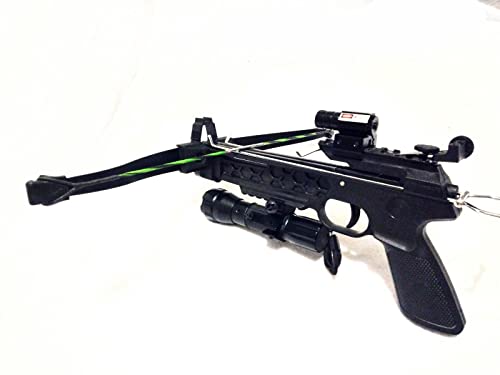
- ✓ Lightweight and portable
- ✓ Safe and easy to cock
- ✓ Comes with tactical accessories
- ✕ Limited width for some users
- ✕ Might need additional sight adjustments
| Draw Weight | 80 lbs |
| Power Stroke | 6 inches |
| Weight | 2.35 lbs |
| Width | 10 inches |
| Limb Material | High-Tech fiberglass and durable steel |
| Included Accessories | 5 x 6-inch bolts, tactical aimer, tactical light, 2 x 20 mm Picatinny rails |
Many believe that a crossbow setup is just about power and accuracy, but I found that the Mongoose Crossbow Tactical Setup actually excels in user-friendly features. Its self-cocking mechanism is surprisingly smooth and safe, making reloading less of a chore and more about enjoying the shot.
The first thing I noticed was how lightweight it feels—just 2.35 pounds—yet it packs a punch with its 80-pound draw weight. The resin construction and durable steel limbs give it a solid feel without adding bulk.
Plus, the tactical adjustable grip fits comfortably in your hand, giving you better control during each shot.
Using the auto-safety mechanism was a game-changer. It engages automatically when cocking, so you don’t have to worry about accidental dry fires.
The high-tech fiberglass limbs are responsive, and the included 5-inch bolts are easy to handle, especially with the two Picatinny rails for mounting accessories.
The tactical version with an aimer and light really ups your game for low-light shots. Setting up the scope and light was straightforward, thanks to the well-designed mounting system.
Whether you’re practicing in your backyard or heading out for a hunting trip, this crossbow feels reliable and precise.
One thing to keep in mind is that the width is just 10 inches, which is great for maneuverability but might require some adjustment if you’re used to larger setups. Overall, this setup combines safety, precision, and versatility, making it a top choice for both beginners and experienced shooters.
RAVIN R29X Silent Cocking Tactical Crossbow, Black

- ✓ Exceptional accuracy
- ✓ Quiet, smooth cocking
- ✓ Lightweight and maneuverable
- ✕ Premium price tag
- ✕ Slightly complex setup
| Muzzle Velocity | 450 FPS |
| Draw Weight | Not explicitly specified, but inferred to be high for crossbows of this speed (typically around 150-180 lbs) |
| Stock Material | Likely composite or lightweight polymer (implied by weight and design) |
| Scope Magnification | Illuminated 100-yard scope (magnification not specified, but suitable for long-range targeting) |
| Arrow Compatibility | .003-inch diameter premium arrows, 400 grains total |
| Weight | 6.75 lbs |
The moment I picked up the RAVIN R29X, I immediately noticed how balanced and sleek it felt in my hands. Its lightweight design, weighing just 6.75 pounds, made it surprisingly easy to maneuver, even when I was perched in an elevated blind.
I was particularly impressed by how smoothly the Helicoil technology allowed the cams to rotate, giving me that rifle-like accuracy I crave in a compact crossbow.
As I began to cock it, the silent cocking system really stood out. No loud clinks or jerks—just a whisper-quiet, controlled draw.
Stopping mid-cycle with the trac trigger gave me total control, which is a game-changer for stealthy hunting. The integrated one-way bearing system made the process feel effortless, almost like the crossbow was doing the work for me.
The included accessories made setup a breeze. The built-in sling mounts and removable draw handle meant I could customize my setup quickly.
The Ravin quiver with mounting bracket held the premium arrows securely, and the illuminated scope gave me confidence in low-light conditions. Shooting at 450 FPS, I could feel the power behind every shot, and the precision was spot-on, thanks to the perfectly balanced cams.
Overall, this setup offers serious performance and convenience. It’s built for hunters who want speed, accuracy, and stealth wrapped into one compact package.
Sure, it’s a bit pricey, but the quality and features justify the investment for those who demand the best.
Excalibur Projectile Bow Mag MAX Accurate High-Output

- ✓ Excellent accuracy and power
- ✓ User-friendly for beginners
- ✓ Quiet operation with suppressors
- ✕ Slightly on the heavier side
- ✕ Price is premium
| Maximum Speed | 350 FPS (feet per second) |
| Overall Length | 32 inches |
| Weight | 6 lbs (bare crossbow), 7.9 lbs (fully equipped) |
| Draw Effort | 14 lbs |
| Draw Type | Rope Aid |
| Power Source | High-Output Limbs |
As soon as I unboxed the Excalibur Projectile Bow Mag MAX, I was struck by its sleek, compact frame. It feels surprisingly lightweight at just 6 pounds, yet it exudes a rugged durability that’s immediately reassuring.
The matte finish and textured grip give it a professional, no-nonsense look that hints at its high-performance capabilities.
Handling it for the first time, I appreciated how balanced it felt in my hands, with a length of 32 inches that’s easy to maneuver in tight spaces. The included accessories, like the scope and quiver, are top-tier and mount seamlessly—no fuss, no wobble.
The Rope Cocking Aid made loading effortless, even after a few rounds, which is a real game-changer for reducing fatigue.
Firing the crossbow, I noticed the quietness thanks to the R.E.D.S. suppressors—definitely less disruptive than I expected.
The 350 FPS speed delivers serious stopping power, and the premium trigger broke cleanly every shot, giving me confidence in my accuracy. The high-output limbs and innovative design make each shot feel consistent and reliable, season after season.
Overall, the Mag MAX’s blend of durability, precision, and ease of use makes it a standout setup. It’s built for hunters who want performance without hassle.
Whether stalking or target practice, this crossbow handles like a pro, with all the accessories ready to go straight out of the box.
Morrell Yellow Jacket Final Shot Crossbow Discharge Bag,

- ✓ Easy arrow removal
- ✓ Weather-resistant surface
- ✓ Portable with handle
- ✕ Not for large field points
- ✕ Slightly heavy for multiple targets
| Target Type | Discharge target bag for crossbows and compound bows |
| Material | Weather-resistant synthetic surface |
| Pack Size | 4-pack |
| Intended Use | Safe arrow discharging and practice |
| Compatibility | Field point arrow tips, crossbows, and compound bows (not for larger outserts or field points) |
| Portability | Includes E-Z tote carrying handle for easy transport |
I was surprised to find how much I appreciated the Morrell Yellow Jacket Final Shot when I accidentally knocked it over during a quick break. The way it stayed intact despite the tumble made me realize just how durable and weather-resistant this target bag truly is.
The first thing I noticed was its compact size—easy to tote around with the E-Z tote handle. It’s perfect for bringing your shooting setup out to the range or even into the woods without fussing over bulky gear.
Setting it up was straightforward, and I appreciated how quickly I could get back to shooting, thanks to the intuitive arrow removal system.
The surface held up well against my field point arrows and crossbow bolts, and I liked that I didn’t have to wrestle with stubborn targets every time I wanted to change out an arrow. The weather-resistant surface means I can leave it outside or toss it in the truck without worry.
Plus, having a 4-pack means I always have backups, which is useful for frequent shooting sessions.
One thing to keep in mind: it’s not recommended for larger field points or outserts, so if you’re using specialized gear, you might need something more robust. And while it’s portable, the four-pack adds up in weight if you’re carrying multiple targets at once.
Still, for regular crossbow practice, this setup hits the mark—safe, reliable, and easy to manage.
What Components Make Up the Best Crossbow Setup?
The best setup for a crossbow includes several essential components that optimize performance and accuracy.
- Crossbow Model: The choice of crossbow model is crucial as it affects the overall performance, speed, and accuracy of your shots. High-quality models often feature advanced materials and designs that enhance durability and reduce noise, which is beneficial for hunting scenarios.
- Scope: A reliable scope is vital for improving accuracy at various distances. Opting for a crossbow-specific scope can provide features like illuminated reticles and adjustable magnification, allowing for better target acquisition and precision shooting.
- Bolts: The type and weight of bolts used can significantly influence the trajectory and impact of your shots. It’s important to select bolts that are compatible with your crossbow, as well as to consider factors like fletching type and weight for optimal performance.
- Broadheads: Choosing the right broadheads is essential for effective hunting. Fixed-blade broadheads offer consistency and penetration, while mechanical broadheads can provide larger wound channels, but are dependent on reliable opening mechanisms.
- Sling or Harness: A good sling or harness makes it easier to carry the crossbow during hunts and can provide added support when aiming. Look for adjustable options that allow for quick access and comfortable transport.
- Cocking Device: A cocking device, whether manual or electronic, ensures that the crossbow is drawn back with consistent tension, which is vital for accuracy and safety. It minimizes the physical strain and can help achieve a perfect draw every time.
- Quiver: A quiver is essential for holding bolts securely while keeping them within easy reach. Selecting a quiver that attaches well to your crossbow and allows for quick access can improve your hunting efficiency.
- Protective Gear: Wearing proper protective gear, such as gloves and safety glasses, enhances safety during operation and shooting. This gear can also help improve grip and reduce fatigue, allowing for better performance over extended periods.
Which Type of Crossbow Should You Choose for Your Needs?
The best setup for a crossbow can vary based on your specific needs and preferences, including hunting, target shooting, and budget considerations.
- Compound Crossbow: Ideal for hunting due to its power and accuracy.
- Recurve Crossbow: Simpler design and easier to maintain, suitable for traditionalists.
- Pistol Crossbow: Compact and portable, good for short-range shooting.
- Electric Crossbow: Offers advanced features and ease of use for tech-savvy users.
- Adjustable Crossbow: Provides flexibility with adjustable draw weights and lengths for various users.
Compound Crossbow: These crossbows use a system of pulleys and cams to provide a smooth draw and increased power, making them perfect for hunting large game. Their design allows for shorter limbs and a lightweight frame, resulting in easier maneuverability in the field.
Recurve Crossbow: Featuring a more traditional design with a simple limb structure, recurve crossbows are known for their reliability and ease of maintenance. They typically require less tuning than compound models and can be a great choice for those who appreciate a classic approach to archery.
Pistol Crossbow: These are smaller, handheld crossbows that are perfect for target shooting or small game hunting at close range. Their compact size makes them easy to transport, but they generally have lower power and range compared to full-sized models.
Electric Crossbow: Equipped with electronic cocking mechanisms and digital displays, electric crossbows offer a high-tech experience for users who enjoy advanced features. They often come with enhanced safety systems and are easier to use, especially for those who may struggle with manual cocking.
Adjustable Crossbow: These crossbows can be modified to fit the user’s specific needs, including adjustable draw weights and lengths. This adaptability makes them a versatile choice for different users, from beginners to experienced archers, allowing for a personalized shooting experience.
How Do Size and Weight Impact Your Crossbow’s Performance?
The size and weight of a crossbow significantly affect its performance, affecting accuracy, speed, and ease of use.
- Draw Weight: The draw weight of a crossbow impacts its power and speed. A higher draw weight typically leads to faster bolt speeds, which can enhance penetration and accuracy at distance, but it also requires more strength to draw, which may not be suitable for all users.
- Overall Length: A crossbow’s overall length can influence stability and maneuverability. Longer crossbows tend to offer better stability for aiming, while shorter models are easier to handle in tight spaces, making them ideal for tree stands or ground blinds.
- Weight of the Crossbow: The weight of the crossbow affects handling and fatigue over extended periods. Heavier crossbows can provide better stability when aiming but may cause fatigue during prolonged use, especially when hunting or shooting for long sessions.
- Weight of the Bolts: The weight of the bolts used can greatly influence trajectory and energy transfer upon impact. Heavier bolts may deliver more kinetic energy and better penetration, while lighter bolts can achieve flatter trajectories and higher speeds, affecting accuracy over distances.
- Balance: The balance of the crossbow, determined by its size and weight distribution, plays a crucial role in aiming and shooting comfort. A well-balanced crossbow allows for easier target acquisition and reduces the strain on the shooter’s arms, enhancing overall performance during use.
What Accessories Can Enhance Your Crossbow Performance?
A stabilizer not only minimizes vibration but also aids in balancing the crossbow, making it easier to hold steady during the shot. This improved stability can be a game-changer, especially when aiming at moving targets.
String dampeners are often overlooked, but they play an important role in quieting the bow after release, which is vital for not spooking game animals. The reduction of noise can also enhance the shooting experience by lessening the disturbance for the shooter and surrounding environment.
A quiver is practical for keeping your bolts organized and quickly accessible, which is particularly useful when you need to reload without delay. A well-designed quiver can also help balance the crossbow and reduce its profile when aiming.
An ergonomic foregrip improves handling by providing a comfortable and secure hold, which can lead to more accurate shots. This added control is especially beneficial during prolonged shooting sessions.
Upgrading to aftermarket bolts can dramatically enhance your crossbow’s performance, as high-quality bolts offer better aerodynamics and durability. This can result in flatter trajectories and deeper penetration on impact, which are crucial for hunting success.
A bow case is essential for maintaining your crossbow in optimal condition. It protects against physical damage and environmental factors, ensuring that your equipment remains reliable and ready for use whenever you need it.
Which Optics Should You Consider for Optimal Accuracy?
When setting up a crossbow for optimal accuracy, it is essential to consider the following optics:
- Red Dot Sight: Provides a simple, illuminated reticle that allows for quick target acquisition.
- Scope with Variable Magnification: Offers flexibility in zoom levels to adapt to different ranges and lighting conditions.
- Fixed Power Scope: Ensures a consistent field of view and is often lighter and more durable than variable scopes.
- Rangefinder Scope: Integrates distance measurement capabilities, allowing for precise adjustments based on the distance to the target.
- Holographic Sight: Projects a reticle onto a lens, offering a wide field of view and maintaining accuracy at various distances.
Red Dot Sight: This type of sight is favored for its ease of use and speed, enabling shooters to quickly line up their shots without losing focus on the target. These sights are typically parallax-free at a certain distance, making them great for fast-moving targets.
Scope with Variable Magnification: This optic allows hunters to adjust magnification levels depending on the distance of the target, making it versatile for various hunting scenarios. It is particularly beneficial for long-range shooting, as it helps in better target identification and aiming precision.
Fixed Power Scope: Known for their simplicity and robustness, fixed power scopes have no moving parts that can wear out, making them reliable in the field. They also tend to be lighter and have a more straightforward setup, which can be advantageous for hunters focused on quick shots.
Rangefinder Scope: This advanced optic combines a traditional scope with a built-in laser rangefinder, allowing hunters to measure the distance to their target and adjust their aim accordingly. It enhances accuracy significantly by taking the guesswork out of distance estimation.
Holographic Sight: This sighting system uses a laser to project a reticle onto a lens, providing a clear aiming point without obstructing the view of the target. It is particularly beneficial for quick target acquisition and can be effective in both bright and low-light conditions.
How Do Broadheads and Fletching Affect Your Shot?
The choice of broadheads and fletching significantly impacts the accuracy and effectiveness of your crossbow shots.
- Broadheads: The type and design of broadheads can influence penetration, flight stability, and wound channels in the target.
- Fletching: The size, shape, and material of fletching affect arrow stabilization and flight trajectory, crucial for precision.
- Broadhead Weight: Heavier broadheads can provide better penetration, while lighter ones may enhance speed and reduce trajectory drop.
- Fletching Configuration: The number of vanes and their arrangement contribute to the arrow’s spin and stabilization during flight.
- Material Quality: The durability and aerodynamic properties of both broadheads and fletching materials can affect performance in various weather conditions.
Broadheads: Broadheads come in various designs, including fixed-blade and mechanical types. Fixed-blade broadheads offer reliable performance and better penetration, while mechanical broadheads expand upon impact, creating larger wound channels. The choice will depend on the type of game being hunted and personal preference.
Fletching: Fletching helps stabilize the arrow during flight, reducing the impact of wind and improving accuracy. Different shapes like helical, offset, or straight fletching can alter how the arrow spins, affecting flight characteristics. Choosing the right fletching size and shape is essential for achieving optimal arrow performance.
Broadhead Weight: The weight of the broadhead can significantly influence the arrow’s speed and trajectory. While heavier broadheads may enhance penetration and energy transfer, lighter broadheads can allow for flatter shooting, reducing the arc of the arrow’s flight. It’s important to balance weight with the crossbow’s specifications for best results.
Fletching Configuration: The configuration of fletching, such as the number of vanes (typically 2 or 3) and their placement, plays a crucial role in arrow stabilization. More vanes can provide better stabilization but may increase drag, affecting speed. Understanding the ideal configuration can help improve accuracy at varying distances.
Material Quality: The materials used in broadheads and fletching can affect their performance, durability, and resistance to environmental factors. High-quality materials can lead to better aerodynamics and longevity, which is vital for consistent performance in various hunting conditions. Investing in durable materials can enhance the reliability of your setup.
What is the Right Arrow Selection for Your Crossbow?
The benefits of choosing the right arrows extend beyond just improved accuracy; they also enhance the shooting experience by reducing noise and vibration during discharge. This can be particularly advantageous in hunting scenarios where stealth is crucial. Best practices for arrow selection include consulting manufacturer guidelines, performing test shots to assess performance, and regularly checking arrow condition to ensure they remain in good shape for use.
Solutions for ensuring the best setup for a crossbow include working with a knowledgeable archery shop or professional, utilizing arrow selection charts provided by manufacturers, and investing in high-quality arrows that match the specific requirements of the crossbow being used. Regular maintenance and inspection of both the crossbow and arrows are also essential to maintain performance and safety.
How Do You Determine the Ideal Arrow Length for Your Setup?
Determining the ideal arrow length for your crossbow setup is essential for accuracy and performance.
- Draw Length: The draw length of your crossbow directly impacts the length of the arrows you should use.
- Arrow Spine: The spine of an arrow refers to its stiffness, which must match the crossbow’s power to ensure optimal flight.
- Personal Preference: Shooter comfort and personal shooting style can also influence the ideal arrow length.
- Manufacturer Recommendations: Always check the manufacturer’s guidelines for recommended arrow lengths based on your specific crossbow model.
The draw length is the distance the crossbow string travels when drawn back. A longer draw length typically requires longer arrows, while a shorter draw length may necessitate shorter arrows to maintain efficiency and accuracy in shooting.
Arrow spine is crucial as it affects how the arrow flexes during flight. If the spine is too weak or too stiff for your crossbow’s draw weight, it can lead to poor accuracy and inconsistent shooting, so finding the right balance is key.
Your personal preference plays a role as well; some shooters may feel more comfortable and confident with longer or shorter arrows based on their shooting style and experience level. It’s important to test various lengths to find what feels best for you.
Manufacturers often provide specifications for the ideal arrow length suited for their crossbows, taking into account the design and performance characteristics. Following these recommendations helps ensure that you choose arrows that will perform reliably and accurately with your setup.
What Materials are Best for Crossbow Arrows?
The best materials for crossbow arrows significantly influence performance and accuracy.
- Carbon: Carbon arrows are lightweight and offer excellent speed and penetration, making them a popular choice among crossbow enthusiasts. They provide a good balance of strength and flexibility, enabling them to withstand the high velocities produced by modern crossbows.
- Aluminum: Aluminum arrows are known for their durability and straightness, providing consistent performance. They are heavier than carbon arrows, which can improve accuracy at longer distances, but they may not penetrate as deeply as carbon upon impact.
- Composite Materials: These arrows combine various materials, often featuring a blend of carbon and aluminum, to leverage the strengths of both. Composite arrows offer enhanced durability and performance, making them versatile for different shooting conditions and preferences.
- Wood: Although less common in modern crossbow setups, wooden arrows can provide a traditional feel and aesthetic. They are generally heavier and less durable than synthetic options, but they can be suitable for lighter crossbows and situations where traditional archery equipment is preferred.
How Should You Maintain Your Crossbow for Longevity?
To ensure the longevity of your crossbow, proper maintenance is key.
- Regular Cleaning: Keeping your crossbow clean is crucial for its performance and durability. After each use, wipe down the limbs, stock, and barrel with a soft cloth to remove dirt, moisture, and debris that can cause wear and tear.
- String Maintenance: The crossbow string is critical for its function, so checking and maintaining it is essential. Wax the string regularly to prevent fraying and ensure it remains lubricated, which helps in reducing wear and prolonging its lifespan.
- Inspecting Components: Regularly inspecting the components of the crossbow, such as the limbs, cams, and riser, can help identify any signs of damage or wear. Look for cracks, splinters, or any unusual sounds during operation, and replace any damaged parts immediately to avoid further issues.
- Proper Storage: Storing your crossbow in a cool, dry place will help protect it from environmental factors that can lead to deterioration. Use a protective case to keep it safe from dust and impacts, and avoid leaving it exposed to extreme temperatures or humidity.
- Check the Scope: If your crossbow is equipped with a scope, regular checks and adjustments are necessary for optimal accuracy. Clean the lenses and ensure the scope is securely mounted, and recalibrate it if necessary to maintain precise aiming.
- Lubrication of Moving Parts: Apply a suitable lubricant to the moving parts of the crossbow, such as the trigger mechanism and bolt guides, to ensure smooth operation. This reduces friction and wear, contributing to the overall efficiency and longevity of the crossbow.
What Regular Maintenance Practices Should You Implement?
Regular maintenance practices for a crossbow are essential to ensure optimal performance and longevity.
- String Waxing: Regularly waxing the bowstring helps maintain its integrity and prevents fraying. This practice also improves the efficiency of the shot by reducing friction during the release of the bolt.
- Inspection of Cables: Checking the cables for any signs of wear, fraying, or damage is crucial. Damaged cables can affect the accuracy and safety of the crossbow, so they should be replaced immediately if any issues are found.
- Cleaning the Limbs: Keeping the limbs of the crossbow clean from debris, dirt, and moisture will prevent corrosion and deterioration. Use a soft cloth to wipe down the limbs after each use to maintain their performance and appearance.
- Checking Bolts: Regularly inspecting your crossbow bolts for any cracks or damage is important for safety and performance. Damaged bolts can lead to inaccurate shots or even accidents, so they should be replaced as needed.
- Tightening Hardware: Periodically checking and tightening all screws, bolts, and other hardware on the crossbow ensures that everything remains secure during use. Loose components can lead to mechanical failure and compromise accuracy.
- Scope Maintenance: If your crossbow is equipped with a scope, ensure it is securely mounted and free from dirt or moisture. Regularly check the zeroing of the scope to ensure it aligns with your aiming point for accurate shooting.
- Storage in a Safe Environment: Proper storage of your crossbow in a cool, dry place will help prevent damage from humidity and temperature fluctuations. Use a protective case to shield it from dust and accidental impacts.
How Can You Ensure Proper Storage for Your Crossbow?
To ensure proper storage for your crossbow, consider the following factors:
- Temperature Control: Keeping your crossbow in a stable temperature environment helps prevent damage to its components.
- Humidity Levels: Maintaining appropriate humidity levels is crucial to prevent rust and corrosion on metal parts.
- Secure Location: Storing your crossbow in a secure location protects it from theft and accidental damage.
- Proper Case: Using a dedicated case ensures that your crossbow is shielded from dust, moisture, and physical impacts.
- Regular Maintenance: Periodically checking and maintaining your crossbow during storage can help identify any potential issues before they worsen.
Temperature Control: Crossbows are sensitive to extreme temperatures. High heat can damage the limbs and string, while very low temperatures can make materials brittle. Storing your crossbow in a climate-controlled area helps maintain its integrity.
Humidity Levels: Excess humidity can lead to rust on metal parts and mold on wooden components. Keeping your crossbow in a low-humidity environment reduces these risks, prolonging the lifespan of the crossbow and its accessories.
Secure Location: A secure storage area minimizes the risk of theft or accidental damage. Whether it’s a locked cabinet, a safe, or a designated room, ensuring that your crossbow is well-protected will give you peace of mind.
Proper Case: Investing in a quality crossbow case is essential. A good case will offer padding and protection against impacts, as well as compartments for storing accessories like bolts and sights, keeping everything organized and safe.
Regular Maintenance: Regularly inspecting your crossbow while it’s stored can help catch any issues early, such as fraying strings or loose components. Applying appropriate lubricants and cleaning the bow also ensures that it remains in optimal condition when you’re ready to use it again.
What Safety Measures Should You Take When Using a Crossbow?
When using a crossbow, it’s essential to implement various safety measures to ensure a secure and enjoyable experience.
- Always Wear Safety Gear: Using protective eyewear and ear protection is crucial when operating a crossbow. This gear helps prevent injuries from string snap or misfires and protects your hearing during target practice or hunting.
- Check Your Equipment Regularly: Regular maintenance and inspection of your crossbow ensure it functions properly. Look for wear and tear on the string, limbs, and other components, as any damage could lead to malfunctions or accidents.
- Follow Proper Loading Techniques: Always load your crossbow in a safe direction, away from people and animals. Ensure that the safety is engaged before loading and never point the crossbow at anything you do not intend to shoot.
- Be Aware of Your Surroundings: Before shooting, always assess your environment for potential hazards. Make sure there is a clear and safe backdrop behind your target to prevent any stray bolts from causing injury or damage.
- Use the Safety Mechanism: Familiarize yourself with the crossbow’s safety features and always engage the safety until you are ready to fire. This practice helps prevent accidental discharges while you’re handling the crossbow.
- Aim with Caution: Only aim at your intended target and be sure of your shot before pulling the trigger. Never shoot at a moving target unless you are certain of your accuracy and the safety of the area beyond the target.
- Store Crossbows Securely: When not in use, store your crossbow in a secure location to prevent unauthorized access, especially by children. Consider using a case for additional protection and to keep it out of reach.
What Essential Gear Is Necessary for Safe Crossbow Operation?
The essential gear necessary for safe crossbow operation includes:
- Crossbow: The primary piece of equipment, a crossbow is designed for precision shooting. It features a horizontal bow mounted on a stock, and it is crucial to choose a model that fits your needs, whether for hunting or target practice.
- Crossbow Scope: A crossbow scope enhances accuracy by allowing the shooter to see the target more clearly. Opt for a model that offers adjustable magnification and is specifically designed for crossbows to ensure optimal performance.
- Quiver: A quiver is used to store and carry bolts securely. It should be lightweight and easily attachable to your crossbow to keep your ammunition readily accessible while ensuring that it is safe from damage.
- Safety Gear: Safety glasses and ear protection are essential to protect against potential injury while shooting. The glasses will shield your eyes from debris, while ear protection is important if shooting in areas where noise could cause hearing damage.
- Bolts: Crossbow bolts are the projectiles used for shooting. Selecting high-quality bolts that match your crossbow’s specifications is vital for achieving accuracy and maintaining safety during operation.
- Bowstring Wax: Regular application of bowstring wax prolongs the life of the string and enhances performance. Keeping the string well-maintained reduces the risk of breakage and ensures smooth operation during shooting.
- Target: A proper target designed for crossbows is necessary for safe practice. Targets should be able to absorb the impact of bolts without causing ricochet or damage, allowing for safe retrieval and practice.
- Crossbow Case: A durable case protects your crossbow during transport and storage. It should be padded and designed specifically for your model to prevent damage from bumps and drops.